5 Great DigitalOcean App Platform Alternatives in 2026
 Lukas Mauser
DigitalOcean App Platform offers an easy way to deploy apps from source code or container registries. It's a solid service for smaller teams and projects, but not always the best choice for every use case. In 2026, pricing is modular: paid container instances start at $5/month, and autoscaling is available only on dedicated instances.
If you're looking for alternatives that better fit your specific requirements, whether it's lower costs, better scaling, or specialized features, there are several options. Here are our top five alternatives to DigitalOcean App Platform:
| Platform | Pricing Model | Best For | Setup Complexity |
|---|---|---|---|
| Sliplane | Per server from €9/month, predictable & cost-efficient | Cost-effective hosting, multiple services | Low |
| AWS App Runner | Compute/memory plus provisioned idle capacity | AWS ecosystem, enterprise scaling | High |
| Coolify | Free self-hosted, or Cloud from $5/month plus your servers | Maximum control, DevOps teams | Medium |
| Render | Per service, free instances then paid services | Simplicity, developer experience | Low |
| Fly.io | Usage-based Machines, autostop/autostart available | Global distribution, edge computing | Medium |
1. Sliplane
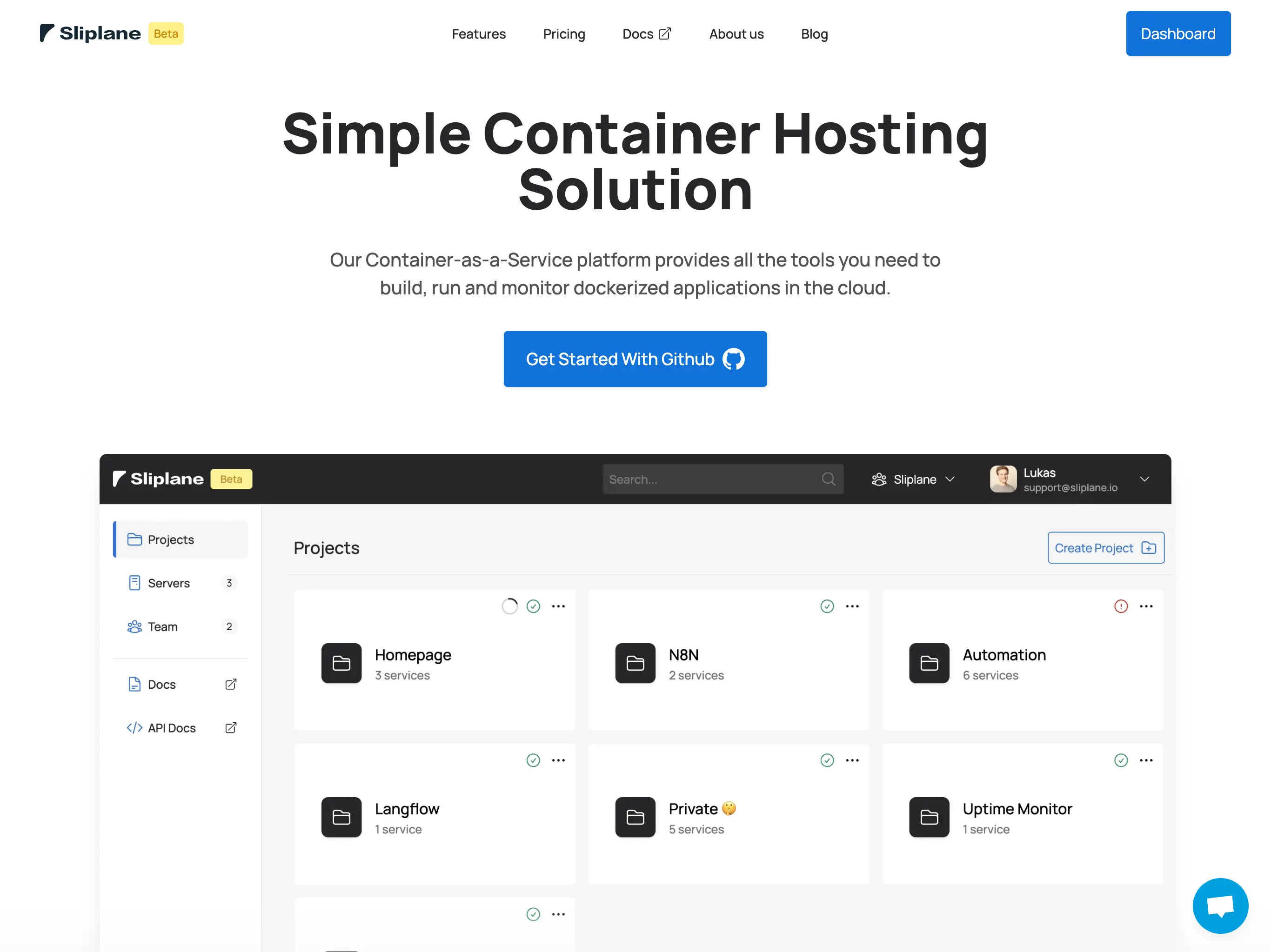
Sliplane is a European PaaS provider focused on containers. It allows you to quickly deploy Docker images from registries like Docker Hub or GitHub Container Registry, or build and deploy your own code directly from a GitHub repository. Pricing starts at €9/month for a server, and you can run as many services on that server as it can handle.
Advantages:
- strong focus on containers makes the transition from local development to deployment seamless
- low and predictable prices, great for POCs, prototypes, internal tools, or smaller apps
- persistent volumes are available for applications that need to store data
- pay-per-server model: only pay for the server and deploy multiple services on it without paying extra for each service
The drawbacks are:
- limited control: you don't get the full flexibility of other providers like AWS, but sensible defaults that make container deployment simple
- limited scalability: Sliplane can potentially handle high traffic and even scale with you to millions of users, but if your app grows beyond that, you may need a larger platform
- no scale-to-zero: Sliplane requires you to keep resources provisioned, although it's often still cheaper due to lower prices, especially when you utilize the ability to run multiple services on a single server
Overall, Sliplane is a great alternative to DigitalOcean if you're looking for a European solution and a simple, cost-effective way to deploy containers.
2. AWS App Runner
AWS App Runner is Amazon's answer to demands for simpler UX. With App Runner, you can deploy apps in a managed container environment. It's part of the massive AWS ecosystem, which can be both a strength and a weakness.
Advantages:
- part of the AWS ecosystem: great if you're already using other AWS services
- enterprise-grade scaling: can handle massive workloads
- extensive integrations with other AWS services
- provisioned memory stays warm: reduces cold start issues compared to serverless options that scale all the way down
Disadvantages:
- high complexity: AWS is known for its steep learning curve. App Runner is supposed to mitigate this, but integration into the entire AWS ecosystem is still overwhelming for many
- IAM, VPCs, and other AWS-specific concepts require significant expertise
- can be more expensive than simpler alternatives
- no true scale-to-zero for running services; you can pause a service manually
AWS App Runner is a good choice if you're already in the AWS ecosystem or need enterprise-grade scaling. For smaller teams or projects, however, the complexity and idle provisioned capacity can be frustrating.
3. Coolify
Coolify is an excellent open-source platform that gives you complete control over your infrastructure. You can host Coolify yourself on your own server or VPS for free, or use Coolify Cloud from $5/month plus your own servers.
Advantages:
- free and open-source when self-hosted
- deployment on various cloud providers or your own VPS
- complete control over your infrastructure
Disadvantages:
- you take on server provisioning, security updates, and maintenance for your app servers
- limited scalability compared to managed services
- time investment
Coolify is perfect if you're not afraid of securing your servers and want complete control over your stack. The self-hosted approach is really powerful for teams with DevOps expertise or to get started cost-effectively.
4. Render
Render is an excellent platform that makes deployment straightforward. The main advantage is simplicity and developer experience. However, it can quickly become expensive, because even though there are free instance options for small services, production workloads move into paid per-service pricing fast - a boutique PaaS for developers.
Advantages:
- simple git-based deployments
- managed databases
- easy scaling
- free instance options for small web services and static sites
Disadvantages:
- long cold starts on free instances
- can quickly become expensive
Render is an excellent choice for developers who want to be productive quickly. The excellent developer experience is one of Render's main advantages, but at the expense of budget.
5. Fly.io
Fly.io is an interesting alternative that particularly stands out for global workloads. Fly's network and Machine model make it easier to run apps close to users, which helps with low-latency applications.
Advantages:
- easy-to-use CLI and UI
- deployment on global edge network
- simple and fast scaling
- usage-based Machine pricing with autostop/autostart available for idle HTTP apps
Disadvantages:
- to benefit from global distribution, your app architecture must be able to handle it
- no automatic build pipeline, manual deployments via CLI
- lower level of abstraction: you need to manage more infrastructure tasks yourself
- not a Cloud Run-style serverless platform, but Machines can autostop/autostart when configured
- more CLI-centric than DigitalOcean App Platform
Overall, Fly.io is a great choice if you're looking for an easy way to deploy globally distributed containerized applications and are willing to manage some infrastructure tasks yourself.
Summary
Choose Sliplane if you're looking for a simple, cost-effective, and European alternative to DigitalOcean App Platform. The strong focus on containers makes the transition from local development to deployment seamless, and the pay-per-server pricing model is great for smaller apps that don't need massive scaling.
AWS App Runner is the right choice if you're already in the AWS ecosystem or need enterprise-grade scaling, but be prepared for a steep learning curve.
Coolify is perfect if you're not afraid to get your hands dirty and deal with infrastructure. The self-hosted open-source solution saves money but costs time for setup and maintenance.
Render offers an excellent service for those who want as little to do with infrastructure as possible and are willing to pay a bit more for it.
Fly.io's main benefit is easy deployment of globally distributed applications with low latencies.