
5 Awesome Elestio Alternatives in 2026
 Jonas Scholz
Elestio is a useful platform if you want managed open-source software without wiring every server detail yourself. In 2026, Elestio says plans start at $11/month for a fully managed service on a dedicated VM, including automated backups, SSL certificates, security updates, OS patches, monitoring, DNS/SMTP, tools, API/CLI access, and human support.
That package can be worth it. But if you are running multiple services, want fixed container hosting, or prefer to own more of the infrastructure, the bill can grow quickly. Here are five Elestio alternatives worth comparing in 2026.
1. Sliplane: fixed-price Docker hosting
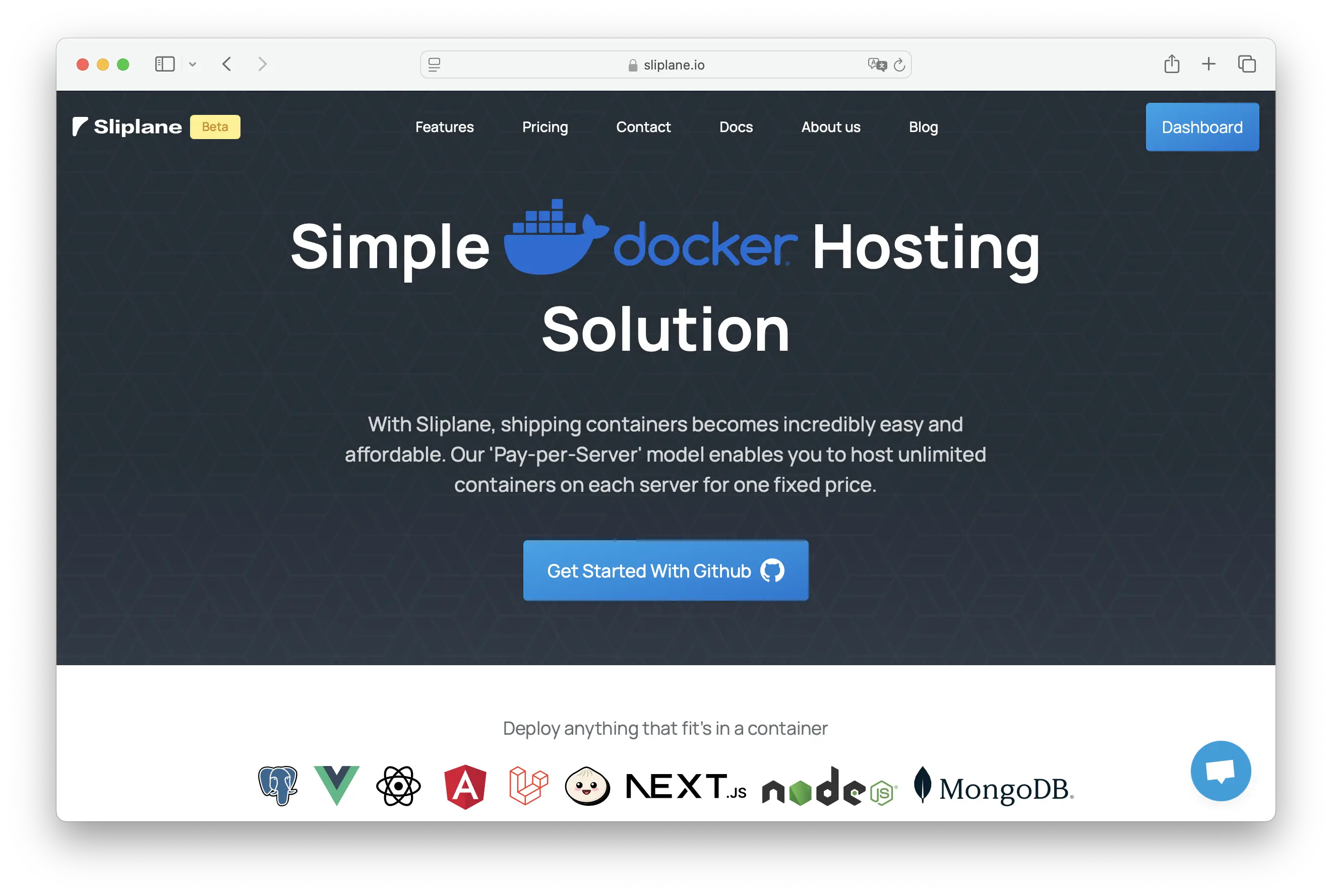
Why Sliplane wins: One server price, unlimited services on that server.
Sliplane starts at €9/month + VAT for the Starter server with 1 vCPU, 1 GB RAM, and 20 GB NVMe. The Base server is €17.80/month + VAT with 2 vCPU and 2 GB RAM. Every server includes unlimited services within the server resources, GitHub deploys, Docker Hub deploys, automatic SSL, health checks, logs, daily volume backups, API access, free egress, and human support.
That makes the economics different from Elestio. Instead of paying for managed deployments service by service, you can run your frontend, API, database, Redis, worker, and open-source tools on one server until you outgrow it.
The trade-offs: Sliplane is not a self-service marketplace for 400+ managed apps in the same way Elestio is, and it does not offer built-in autoscaling. You get simpler Docker hosting with fixed server pricing.
Perfect for: Developers running multiple Docker services, startups that need predictable costs, and teams that want managed servers without per-app pricing.
2. Coolify: open-source platform on your own servers
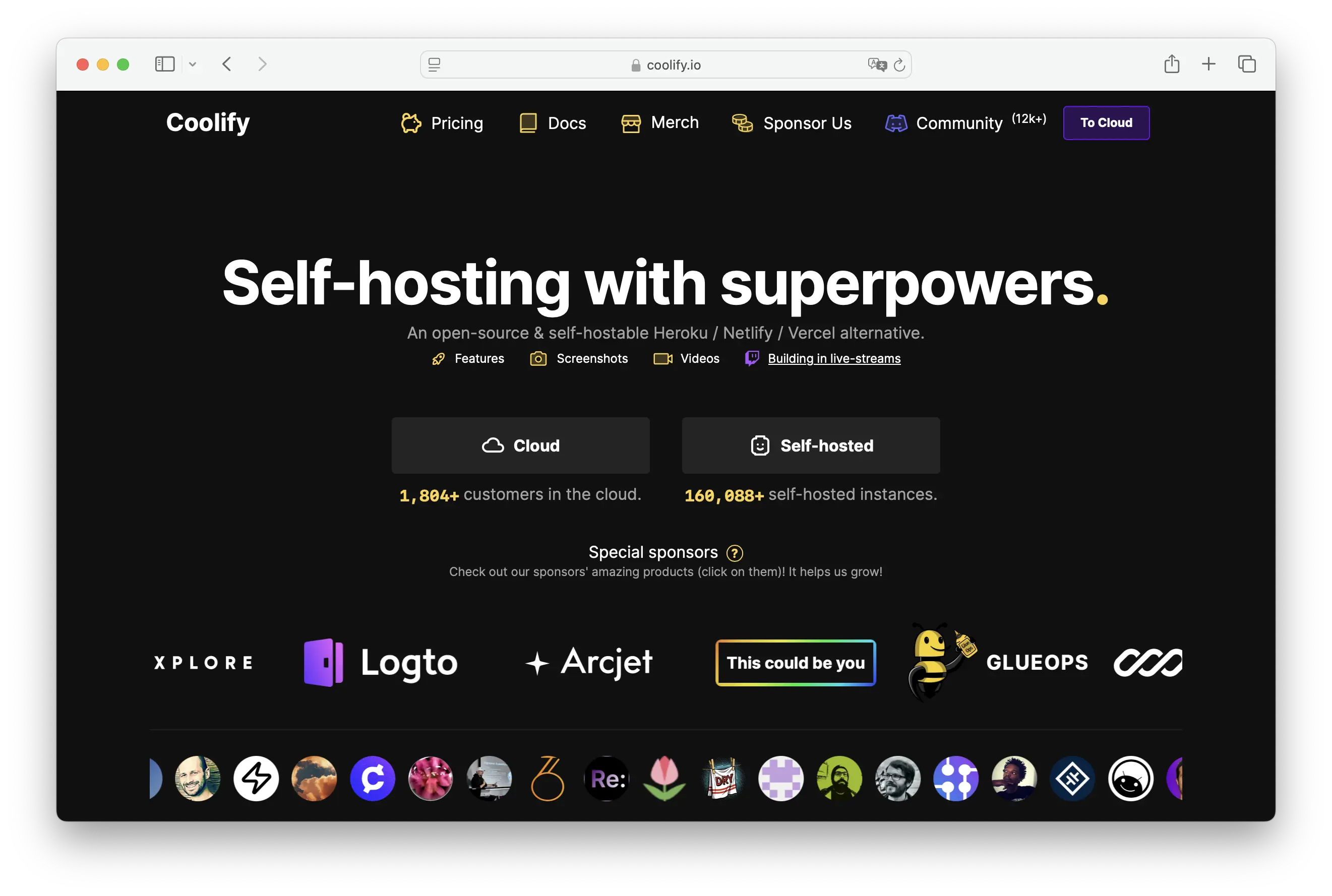
Coolify is the alternative for people who like Elestio's deployment convenience but want to run the control plane closer to their own infrastructure. It is open source, supports apps and databases, and works with your own VPS or dedicated servers.
Coolify Cloud currently starts at $5/month for connecting two servers, then $3/month per additional server. You still pay for the servers themselves, but the model is attractive if you want to run many apps.
The reality check: You trade managed convenience for control. OS updates, backup strategy, server sizing, and security are your responsibility.
Perfect for: Technical teams, cost-conscious startups, and developers who want a self-hosted PaaS without building everything from scratch.
3. Railway: usage-based developer experience
Railway is the fastest path from repo to running app for many modern web projects. It has a clean dashboard, templates, Git deploys, databases, logs, and usage-based billing.
Current public pricing includes a Free plan with a 30-day $5 credit trial that becomes $1/month, Hobby with $5 minimum usage, and Pro with $20 minimum usage. Hobby and Pro include monthly usage credits at the same amount, then you pay for additional resource usage.
The pricing sweet spot: Small apps can stay cheap if resource usage is low. Growing apps pay more naturally as they consume CPU, RAM, storage, and bandwidth.
What to watch: Usage-based pricing is flexible, but it is not the same as predictable. Set limits and alerts if you move production workloads there.
Perfect for: Indie developers, small teams, prototypes, and apps where deployment speed matters more than fixed monthly pricing.
4. Hetzner Cloud VPS: the DIY cost champion
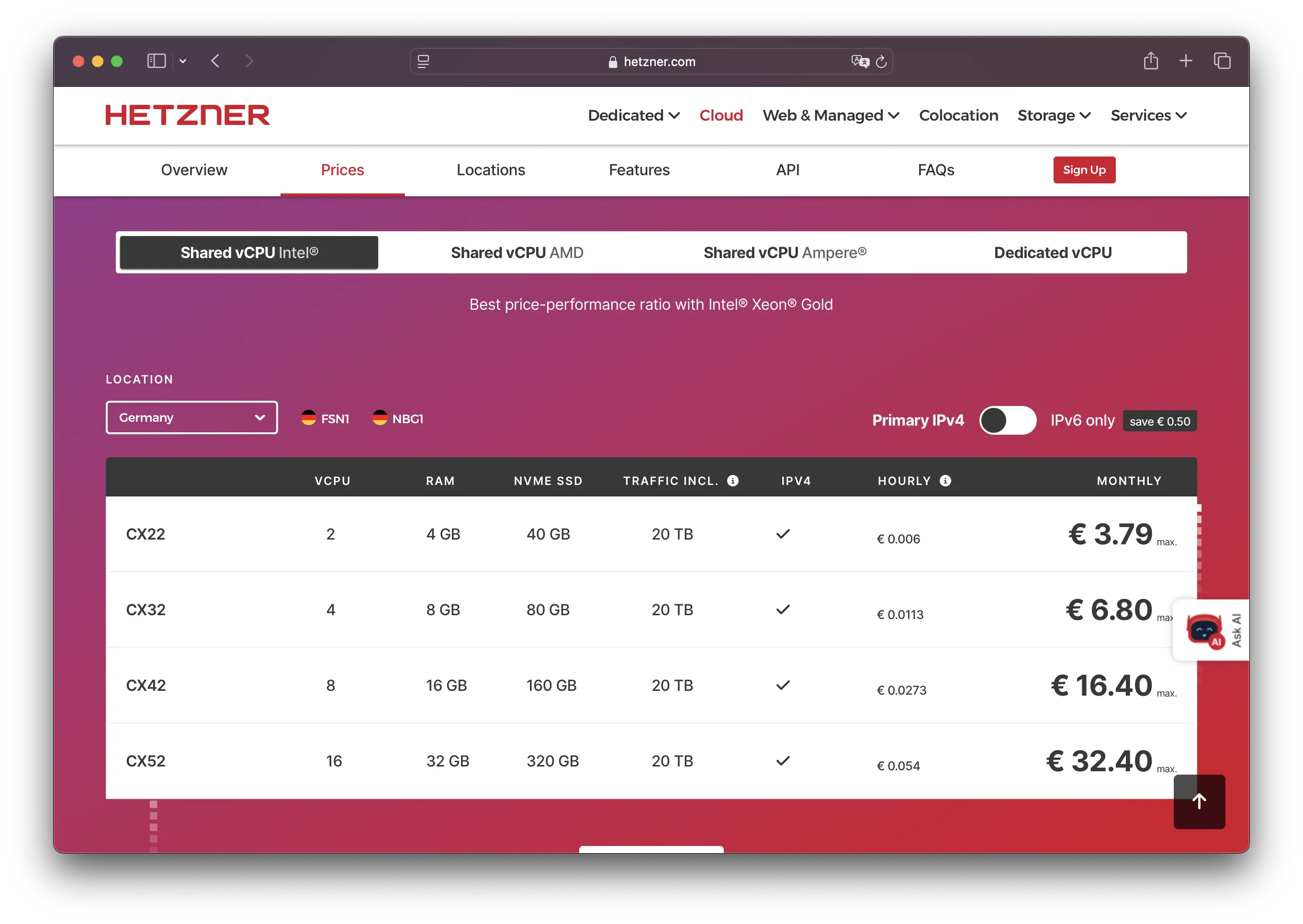
Hetzner Cloud is the lowest-cost option here if you are comfortable managing a server. You get strong price-performance, European locations, US locations, Singapore, private networks, firewalls, snapshots, one-click apps, API access, and generous included traffic.
Popular small Hetzner Cloud servers start around €3.79/month depending on location and plan. Add Docker Compose, Caddy or Traefik, backups, and monitoring, and you can run a lot for very little money.
The effort: You are now the platform team. That means OS updates, SSH security, firewall rules, backups, deploy scripts, logs, alerts, incident response, and disaster recovery.
Perfect for: Developers who enjoy Linux, teams optimizing for raw cost, and projects that need custom server-level control.
5. DigitalOcean: managed and DIY in one place
DigitalOcean sits between a DIY VPS provider and a broader cloud platform. Droplets start at $4/month for 512 MiB RAM, 1 vCPU, 10 GiB SSD, and 500 GiB transfer. You can also use App Platform, managed databases, object storage, load balancers, Kubernetes, and a big marketplace.
That flexibility is the main benefit. You can start with a Droplet, move parts to managed services, and keep everything in one account.
The consideration: More choices also mean more architecture decisions. If you want Elestio's "pick app, deploy, maintain it for me" model, DigitalOcean requires more setup.
Perfect for: Teams that want both VPS control and optional managed cloud services.
Conclusion
| Platform | Best for | Pricing shape | Main trade-off |
|---|---|---|---|
| Sliplane | Multiple Docker services with fixed costs | From €9/month per server | Not an app marketplace like Elestio |
| Coolify | Self-hosted PaaS control | Free or $5/month Cloud plus servers | You manage servers |
| Railway | Fast app deployments | Free trial, then usage-based minimums | Costs move with usage |
| Hetzner Cloud VPS | Lowest raw infrastructure cost | Low-cost VPS plans | Fully DIY operations |
| DigitalOcean | Mix of VPS and managed cloud | Droplets from $4/month | More architecture work |
Choose Sliplane if you want Elestio's convenience but prefer fixed Docker hosting costs. Choose Coolify if you want a self-hosted PaaS. Choose Railway if speed and usage-based pricing fit your workflow. Choose Hetzner if raw cost matters most. Choose DigitalOcean if you want a flexible cloud toolbox.
For a direct comparison, read Sliplane vs Elestio. If you are comparing more PaaS options, the cheap Heroku alternatives guide is a good next read.
Cheers,
Jonas