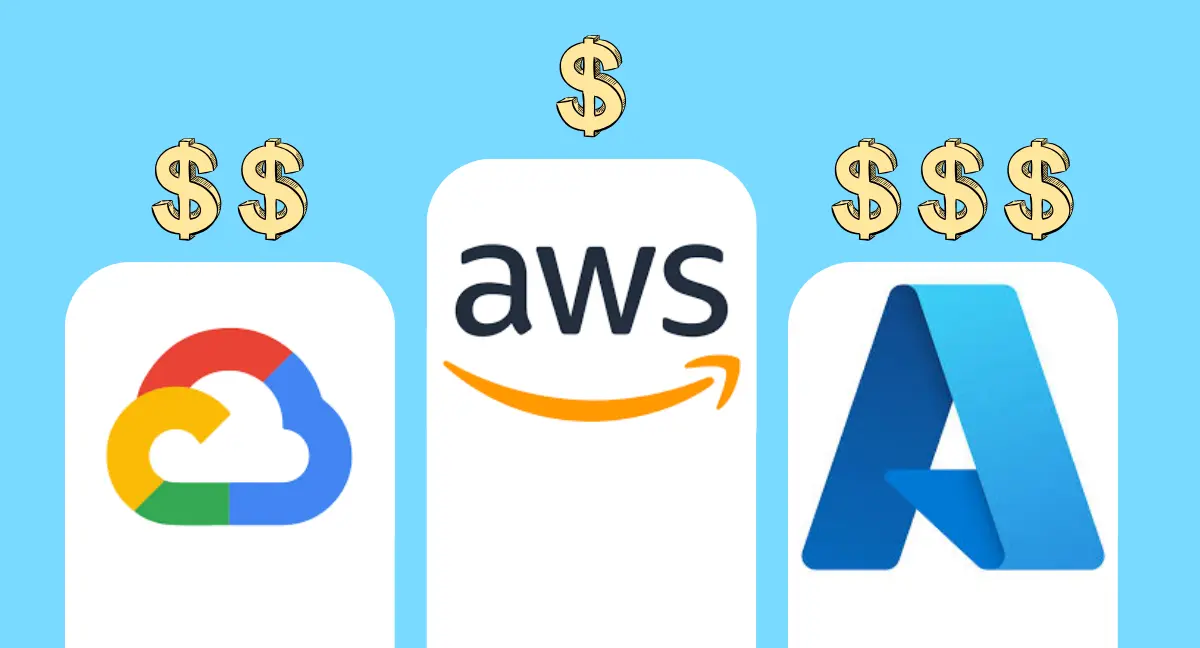
2026 Price Comparison: AWS Fargate vs Azure Container Apps vs Google Cloud Run
 Lukas Mauser
AWS Fargate, Google Cloud Run, and Azure Container Apps all let you run containers without managing servers. They also all make pricing harder than it looks.
This 2026 update recalculates the core numbers for compute, bandwidth, and block storage. The short version: AWS Fargate still has the cheapest always-on compute in this comparison, Google Cloud Run is competitive when scale-to-zero matters, and Azure Container Apps is very close to Cloud Run's request-based pricing.
Serverless containers are great when you truly need bursty scaling. If your app is mostly always-on, a fixed-price platform like Sliplane is often much cheaper and easier to reason about.
Assumptions
Cloud prices depend on region, CPU architecture, billing mode, discounts, public IPs, logs, registries, load balancers, and data transfer paths. To keep this readable, the tables below use:
- US East / comparable US East regions
- Linux x86 CPU pricing where applicable
- pay-as-you-go pricing with no savings plans or committed-use discounts
- 730 hours per month for monthly compute equivalents
- prices checked against official pricing pages and the Microsoft Azure Retail Prices API in June 2026
Compute
| Monthly equivalent, US East | AWS Fargate | Google Cloud Run instance-based | Google Cloud Run request-based | Azure Container Apps consumption |
|---|---|---|---|---|
| vCPU | $29.55 | $47.30 | $63.07 | $63.07 |
| 1 GB memory | $3.25 | $5.26 | $6.57 | $7.88 |
| 1M requests | - | - | $0.40 | $0.40 |
| CPU free tier | - | 240,000 vCPU-s | 180,000 vCPU-s | 180,000 vCPU-s |
| Memory free tier | - | 450,000 GiB-s | 360,000 GiB-s | 360,000 GiB-s |
| Request free tier | - | - | 2M requests | 2M requests |
Sources: AWS Fargate pricing, Google Cloud Run pricing, Azure Container Apps pricing, and the Azure Retail Prices API for the rendered Azure meter values.
What this means in practice:
- Fargate is cheapest for always-on raw compute in this simplified comparison.
- Cloud Run instance-based billing is cheaper than request-based billing for always-warm services, but it does not include the same request billing model.
- Cloud Run request-based and Azure Container Apps line up closely on CPU and requests.
- Azure memory is more expensive in the consumption plan.
- ARM, spot, committed-use discounts, savings plans, and long-term reservations can change the order.
Bandwidth
Ingress is free on all three platforms, but egress to the public internet can dominate the bill once your app serves files, APIs, or media.
| Public internet egress, US East-ish | AWS | Google Cloud Run / Google Cloud Premium Tier | Azure bandwidth |
|---|---|---|---|
| Free allowance | 100 GB/month | 1 GiB/month in North America | 100 GB/month |
| First paid tier | $0.09/GB | $0.12/GiB | $0.087/GB |
| Rough 1 TiB bill after free tier | ~$83 | ~$123 | ~$80 |
Sources: AWS EC2 data transfer pricing, Google Cloud networking pricing, Cloud Run networking notes, Azure bandwidth pricing, and the Azure Retail Prices API.
This is one place where the platform-level comparison gets messy. Cloud Run specifically uses Google's Premium Network Service Tier for outbound internet transfer. Azure also has routing preference options. CDN usage, private networking, same-region traffic, and inter-region traffic all change the result.
Storage
Container platforms often push persistent state into managed databases or object storage, but block storage still matters for volumes, caches, uploads, and stateful services.
For a simple 128 GB disk in US East-style regions, as of June 2026:
| 128 GB block storage | Monthly price | Notes |
|---|---|---|
| AWS EBS gp3 | $10.24 | Storage only; extra IOPS/throughput can add cost |
| Google Hyperdisk Balanced | ~$10.24 | Provisioned IOPS/throughput above baseline can add cost |
| Azure Standard SSD E10 LRS | $9.60 | Operations can add cost depending on disk type and usage |
Sources: AWS EBS pricing, Google disk pricing, Azure Managed Disks pricing, and the Azure Retail Prices API.
Other costs people forget
Compute is rarely the whole bill. Watch for:
- logs and metrics retention
- build minutes and artifact storage
- container registry storage and pulls
- NAT gateways, load balancers, and public IPv4 addresses
- managed databases
- secrets managers and key vaults
- cross-region traffic
- support plans
This is why a "cheap" serverless container setup can turn into a weird invoice detective story.
When to choose which platform
| Use case | Best fit |
|---|---|
| Lowest always-on compute in this comparison | AWS Fargate |
| Simple scale-to-zero HTTP containers | Google Cloud Run |
| Azure ecosystem, KEDA-based scaling, enterprise Microsoft setup | Azure Container Apps |
| Predictable always-on Docker hosting | Sliplane |
Summary
AWS, Google Cloud, and Azure have excellent container platforms, but their pricing is still complex in 2026. AWS Fargate is the cheapest for the simplified always-on compute case. Google Cloud Run and Azure Container Apps are strong when scale-to-zero and event-driven workloads matter. Bandwidth and logs can change the final bill quickly.
If your app is steady, internal, or made of several small services, compare the serverless estimate with fixed-price Docker hosting before you decide. On Sliplane, you can run multiple Docker services on one server from 9 EUR/month, with free egress and predictable monthly pricing.
For more context, check our comparisons of Google Cloud Run alternatives, Azure Container Apps alternatives, and Google Cloud Run vs Sliplane.