
5 Awesome Google Cloud Run Alternatives in 2026
 Lukas Mauser
Google Cloud Run promises serverless container magic. And to be fair, it often delivers. Google Cloud Run is a solid platform, with request-based billing, instance-based billing, scale to zero, GPUs, jobs, and worker pools. But it's not perfect for everyone. Pay-per-use can lead to unexpected costs, cold starts can impact latency-sensitive applications, and sometimes you just want more control over your infrastructure. If you're looking for alternatives that offer different trade-offs, here are five platforms worth considering:
| Platform | Pricing Model | Scale to Zero | Best For | Setup Complexity |
|---|---|---|---|---|
| Sliplane | Pay-per-server, from €9/month | No | Predictable costs, European hosting | Low |
| AWS App Runner | Compute/memory plus provisioned idle capacity | No, pause only | AWS ecosystem, enterprise | Medium |
| Azure Container Apps | Consumption or dedicated | Yes | Microsoft ecosystem, enterprise | Medium |
| Fly.io | Usage-based Machines | Configurable autostop/autostart | Global edge, low latency | Medium |
| Render | Per service | Free instances spin down | Startups, growing teams | Low |
1. Sliplane
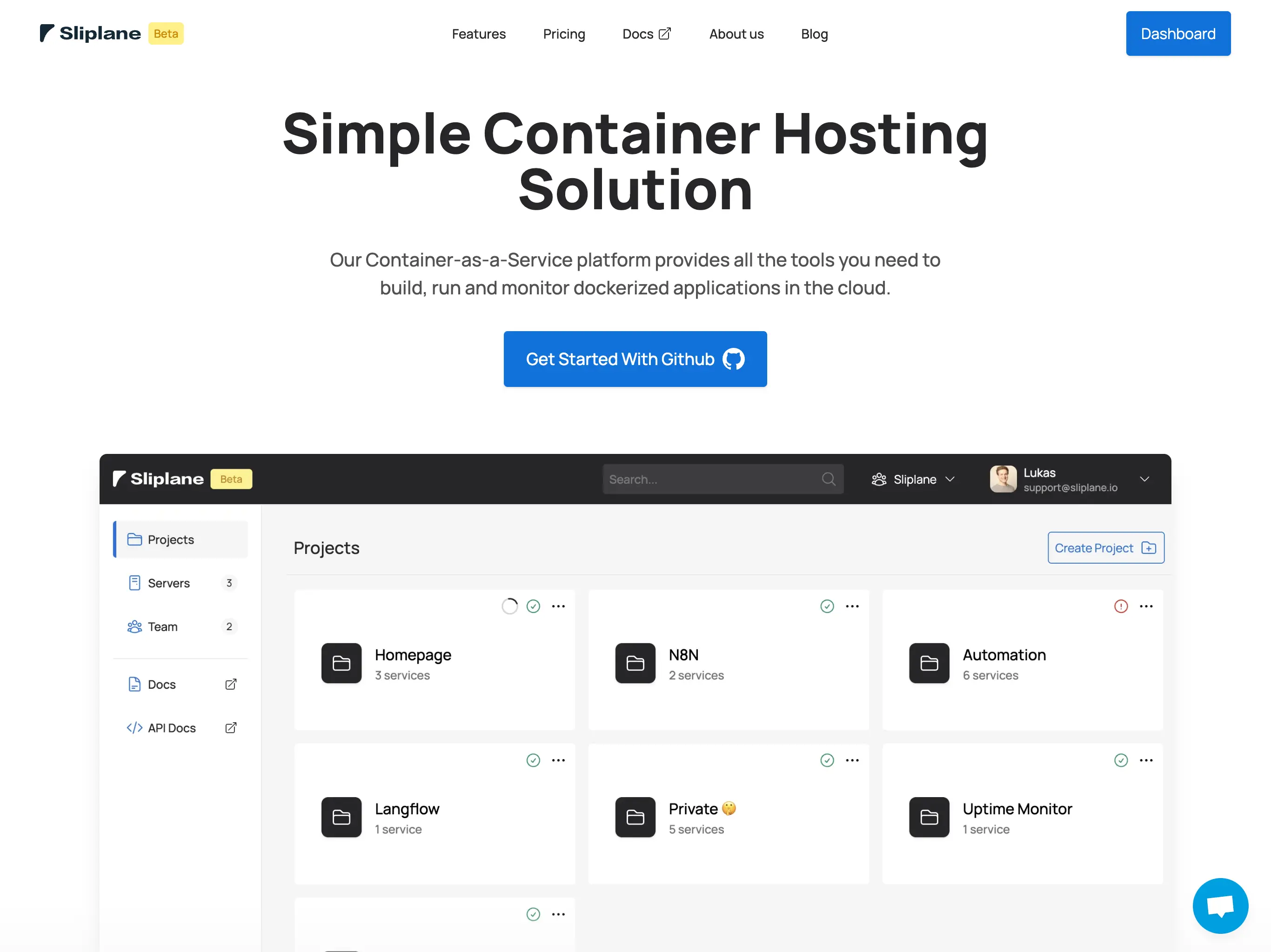
Sliplane takes a different approach to container hosting. Instead of the serverless, pay-per-request model, the European provider offers a pay-per-server pricing structure starting at €9/month: spin up as many services as your server can handle for a fixed monthly price. The server model brings several additional advantages for certain use cases:
- Fixed, predictable monthly costs without surprises on your bill
- No cold starts, your applications are always ready
- Better suited for long-running apps with persistent connections (WebSockets, SSE)
- Deploy multiple services on one server without per-service charges
- Persistent volumes work more naturally without complex configurations
- European data centers with GDPR compliance built-in
The downsides are:
- No scale to zero, you're paying for the server even when traffic is low
- Requires more traditional capacity planning
- Less automatic than serverless platforms
- Limited scalability compared to hyperscale cloud providers
Overall, if you don't want to break the bank and want to avoid the complexity of Hyperscalers, Sliplane offers a straightforward alternative. It's particularly well-suited for all of your internal tools, prototypes, POC's and your next startup idea.
2. AWS App Runner
AWS App Runner is Amazon's attempt to simplify container hosting. To be honest, while AWS made some progress in usability with App Runner, it still does not come close to the simplicity of Google Cloud Run or other options in this list.
You don't choose AWS because it's easy, but because it's not easy and you like to feel the pain. To show the world that you can tame the beast. And you are rewarded with unlimited scalability and deep integration into the AWS ecosystem.
Advantages worth considering:
- Deep integration with other AWS services (RDS, S3, etc.)
- Compared to Cloud Run request-based services, it keeps provisioned memory warm, reducing cold start times
- Enterprise management stuff - like security, compliance and monitoring
Downsides:
- Steeper learning curve, especially around IAM and VPC configuration
- No true scale to zero for running services; you can pause a service manually
- More complex setup compared to Cloud Run
Pricing is based on provisioned memory, active vCPU/memory while processing requests, and optional build or automatic deployment fees. It really depends on your setup, but it can be cheaper than Google Cloud Run for some traffic patterns and more expensive for idle services that need to stay warm. AWS App Runner makes most sense if you're already invested in the AWS ecosystem and need tight integration with other AWS services.
3. Azure Container Apps
Azure Container Apps is Microsoft's serverless container platform, built on Kubernetes. It's a direct competitor to Google Cloud Run with some interesting differentiators, including KEDA-based scaling, Consumption and Dedicated plans, jobs, and serverless GPU options.
Azure Container Apps competes well in the serverless container space with a relatively straightforward developer experience. But in the straight comparison to Cloud Run, there are some trade offs to consider. Especially startup times and autoscaling responsiveness are known to be better on Google Cloud Run.
That being said, you might still consider Azure Container Apps, if you need:
Key advantages:
- KEDA-based autoscaling with more customization options
- Good integration with Azure DevOps
- Consumption pricing with monthly grants for vCPU seconds, memory, and requests
The challenges:
- Bit of a learning curve if you're not familiar with Azure, but nothing compared to AWS
- Cold starts exist and are generally slower than GCR
- Autoscaling can be less responsive than Google's implementation
Similar to AWS, it probably comes down to ecosystem preference or enterprise sales that you are not involved in. Pricing can be similar to Google Cloud Run, but Azure's Consumption and Dedicated plans make the trade-offs slightly different.
4. Fly.io
Fly.io's main differentiation is making edge computing simpler. Instead of running your application in one or two regions, Fly makes it straightforward to run Machines close to users, which can be beneficial if you need low latency for international traffic.
Key strengths:
- Global edge deployment across multiple regions
- CLI-focused workflow that's efficient for developers
- Fast scaling and deployment
- Usage-based Machine pricing, with autostop/autostart available for idle HTTP apps
Important considerations:
- Not Cloud Run-style serverless, but Machines can autostop/autostart when configured
- Your app needs to work in the distributed architecture, if you want to benefit from global distribution
- More CLI-centric than Cloud Run, with less of a managed build/deploy dashboard
If your application is latency-sensitive and you need global reach, Fly.io offers compelling advantages. However, it requires some more technical knowledge and is generally a lower level abstraction than other cloud platforms mentioned in this list.
5. Render
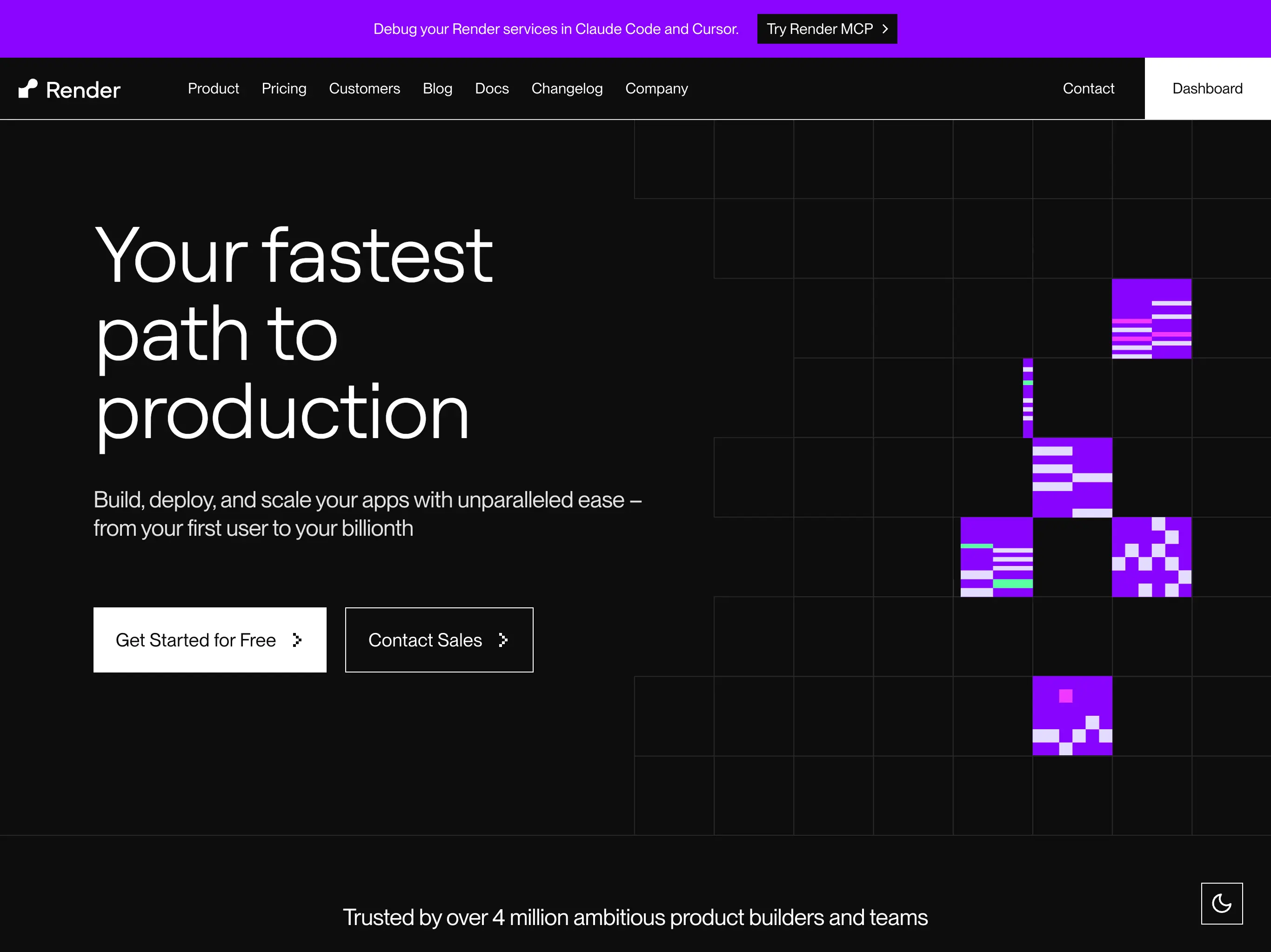
Render is a modern cloud platform that aims to simplify deployment on production-grade infrastructure. It offers a straightforward alternative to both traditional cloud providers and newer serverless platforms.
Render positions itself as a developer-friendly platform with the reliability and features needed for production applications, without the complexity of major cloud providers. It has free instance options for small web services and static sites, but serious workloads move into paid per-service pricing quickly.
Primary advantages:
- Simple, intuitive deployment process
- Free instance options for static sites and small web services
- Overall good scalability
Limitations to consider:
- Becomes costly fast
- No true serverless experience for production workloads; paid services are persistent per-service resources
- Limited ecosystem compared to big cloud providers
Render falls in the category of a boutique cloud platform. They make it very developer friendly and easy to use, but charge more than accordingly. I like the DX and sleek design, though.
Summary
Choose Sliplane for POC's, internal tools and smaller projects. The pay-per-server model provides clear monthly costs, and you can run multiple services without per-service fees. The European hosting with GDPR compliance is an additional benefit for EU-based projects. The focus on containers makes the transition from local development to deployment seamless.
If you are looking for a serverless alternative to GCR, AWS App Runner or Azure Container Apps are both interesting options. The decision probably comes down to ease of use and how much you are invested into their ecosystems.
Fly.io is a solid alternative if you need to deploy globally and latency is a critical concern. The edge computing model provides excellent performance for geographically distributed users, though it requires more technical expertise to fully benefit from it.
Render offers great DX. While it's not really a serverless platform, it offers free instance options that can be used for hobby projects, but becomes costly fast as soon as you want to run anything more serious.