
5 Awesome Vercel Alternatives in 2026
 Lukas Mauser
Vercel is still one of the easiest ways to deploy frontend apps, especially Next.js. In 2026, the pricing is also more usage-aware than many people expect: Hobby is free, Pro is $20/month plus additional usage, and the pricing table includes metered bandwidth, functions, builds, analytics, image optimization, and more.
That model is fine when your app fits Vercel perfectly. It gets less fun when you need long-running workers, custom containers, databases, queues, internal tools, or predictable monthly costs. Here are five Vercel alternatives worth checking in 2026.
Quick comparison
| Platform | Ease of use | Pricing | Best for | Trade-offs |
|---|---|---|---|---|
| Sliplane | Very easy | Fixed price per server | Full-stack Docker apps, multiple projects | Not serverless |
| Coolify | Medium | Self-hosted plus server cost | Full control, open source PaaS | Requires server maintenance |
| Render | Very easy | Account plan plus compute | Heroku-like developer experience | Costs rise with services |
| Fly.io | Medium | Usage-based infrastructure | Global apps and edge-like deploys | More infrastructure work |
| AWS | Hard | Low-level usage pricing | Enterprise and custom needs | Steep learning curve |
1. Sliplane
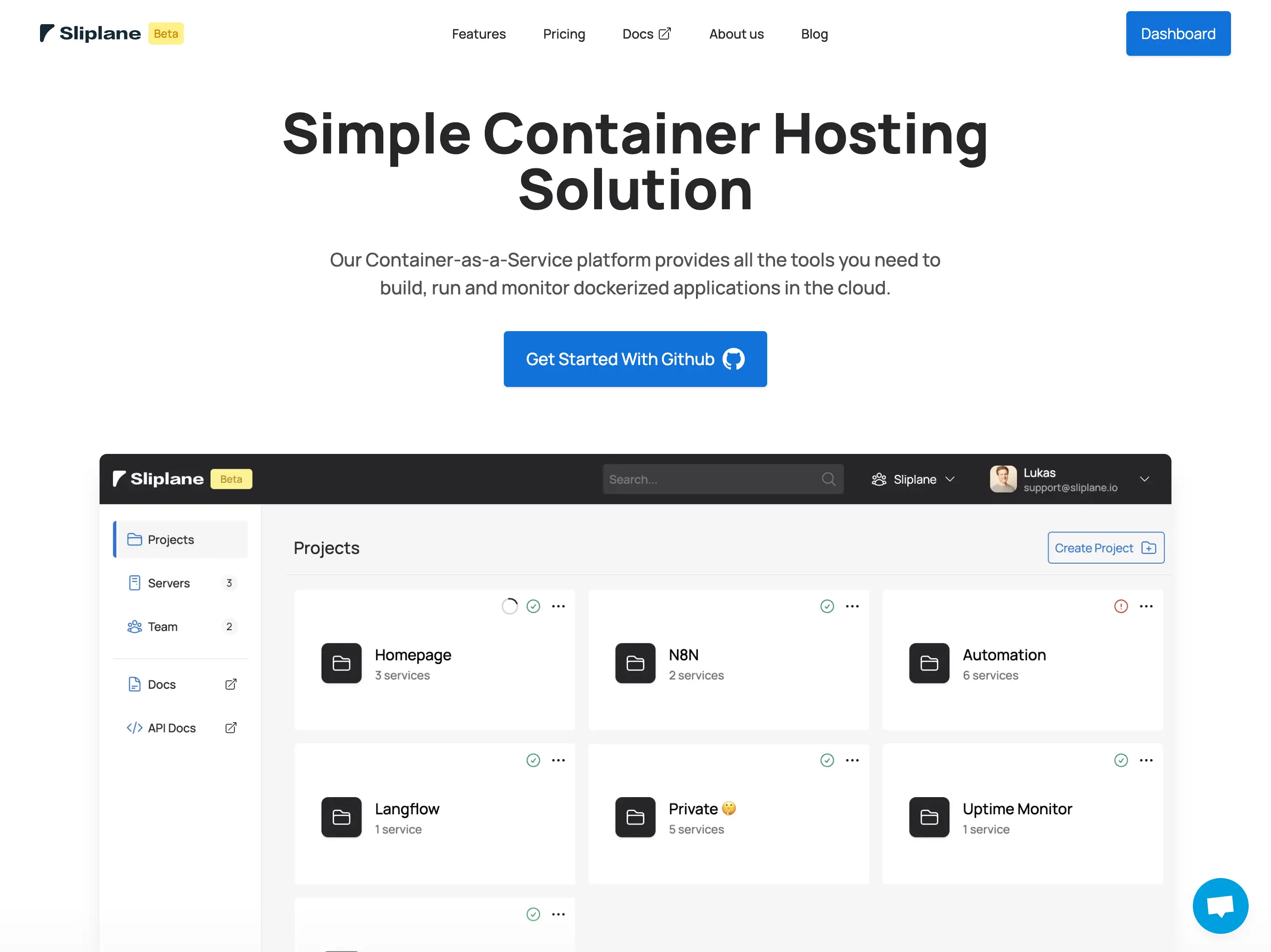
Sliplane is a European platform for hosting containerized apps. Like Vercel, you can connect GitHub and deploy from your repo. Unlike Vercel, Sliplane is built around Docker servers, so you can deploy frontends, APIs, databases, workers, queues, cron jobs, and open-source tools on the same platform.
Pricing starts at €9/month + VAT for a Starter server with 1 vCPU, 1 GB RAM, and 20 GB NVMe. You can run unlimited services on that server, limited by resources. The Base server is €17.80/month + VAT with 2 vCPU and 2 GB RAM.
Sliplane is not serverless and not trying to be infinitely elastic. The upside is that you avoid uncapped serverless bills, get predictable server pricing, and can deploy much more than frontend code.
Choose Sliplane if you want a simple, cost-effective Vercel alternative for full-stack Docker apps.
2. Coolify
Coolify brings a Vercel-like dashboard to your own servers. It is open source, supports Git deploys, Docker apps, databases, SSL, and templates.
The self-hosted version is free apart from your server bill. Coolify Cloud starts at $5/month for connecting two servers, plus $3/month per additional server, while you still bring the servers.
Coolify is perfect if you want control, low costs, and do not mind owning server updates, backups, monitoring, and security.
3. Render
Render is the closest Vercel alternative if you want a polished managed platform and a broader backend feature set. You can deploy web services, private services, workers, static sites, cron jobs, Postgres, key-value stores, and Docker containers.
Render's account plans currently include Hobby at $0/month plus compute, Pro at $25/month plus compute, and Scale at $499/month plus compute. Web service instances include Free, Starter at $7/month, Standard at $25/month, and larger Pro tiers. Postgres also has a limited free plan and paid tiers.
Render is excellent for teams that want productivity fast. Just keep an eye on how many services, databases, and workers you add.
4. Fly.io
Fly.io goes lower-level than Vercel. You deploy apps as Fly Machines close to users, get private networking, autoscaling, zero-downtime deploys, monitoring, and usage-based billing.
Fly's public pricing is pay-as-you-go infrastructure. Support starts at $29/month, reservations can discount machine usage, and bigger compliance/support packages are separate.
Fly.io is a great fit when global placement matters and you are comfortable with containers, regions, volumes, and a CLI-driven workflow. It is less plug-and-play than Vercel or Sliplane.
5. AWS
Vercel runs on cloud infrastructure, so of course AWS can replace it if you want lower-level control. The hard part is choosing the right AWS product.
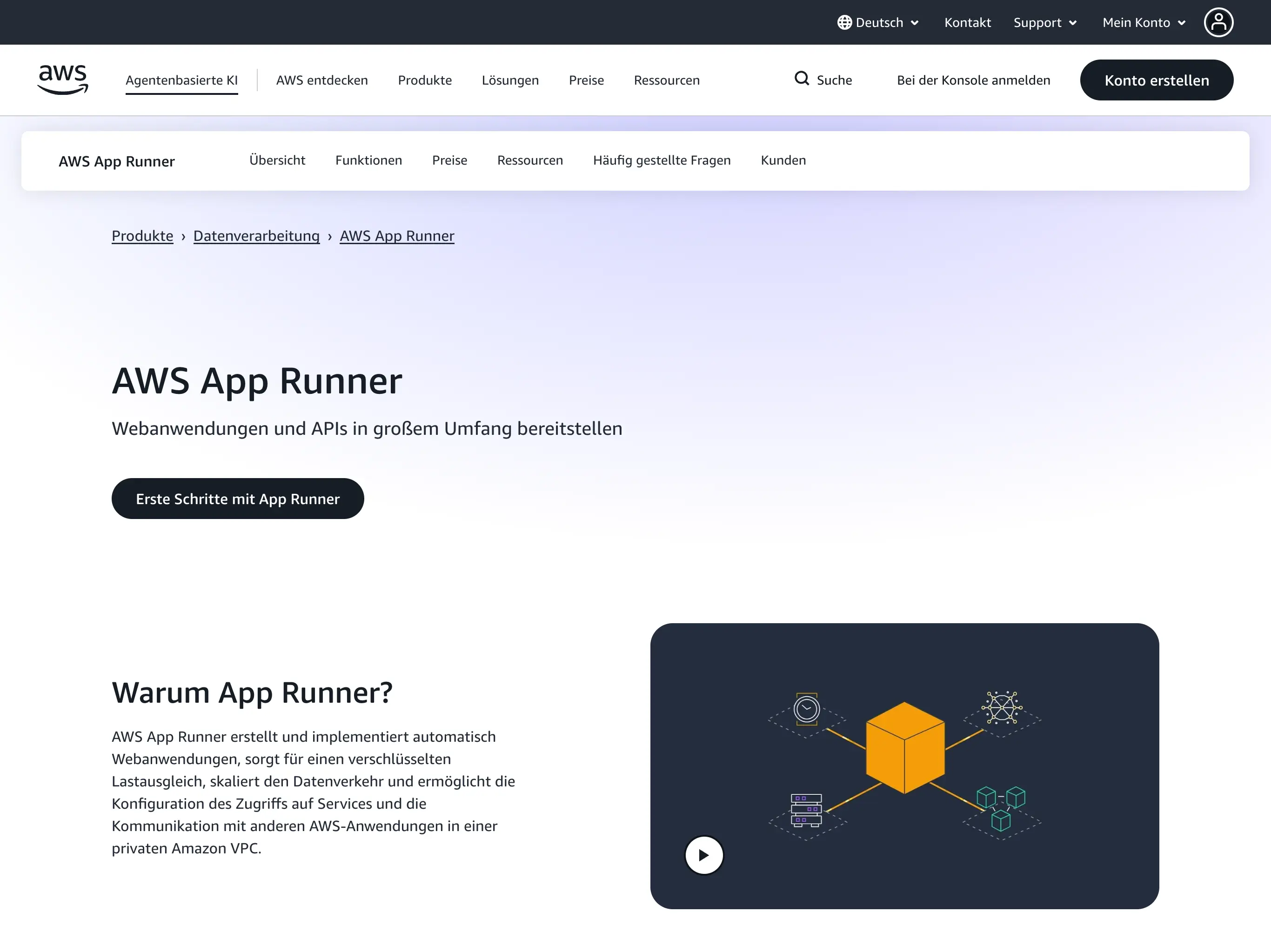
For frontend and full-stack apps, you might look at AWS Amplify, AWS App Runner, ECS/Fargate, Lambda, CloudFront, S3, RDS, or Lightsail. Lightsail alone starts at $5/month for Linux/Unix bundles with public IPv4, or $3.50/month for IPv6-only bundles.
AWS is powerful and can be cheap at scale if you know what you are doing. But if the reason you picked Vercel was simplicity, AWS will feel like a very different world.
Summary
Vercel is a fantastic frontend platform, but it is not the best fit for every app. Choose Sliplane if you want predictable Docker hosting for full-stack apps. Choose Coolify if you want open-source self-hosting. Choose Render if you want a polished managed PaaS with backend services. Choose Fly.io if global app placement matters. Choose AWS if you need full cloud control and have the skills to manage it.
If your main pain is unpredictable serverless pricing, also read Serverless is a scam. If your next app is Docker-based, this guide on easy ways to deploy Docker containers is a practical next step.