
5 Modern AWS Lightsail Alternatives in 2026
 Jonas Scholz
If you are looking for an alternative to AWS Lightsail in 2026, you are probably searching for a service that is easy to use, affordable, and flexible enough to run your web apps or services without dealing with the complexity of traditional cloud infrastructure. Lightsail still has simple monthly bundles, with Linux plans starting at $5/month when you need public IPv4, or $3.50/month for IPv6-only instances. In this post, we look at several strong alternatives that offer different levels of control, simplicity, and pricing models.
1. Sliplane
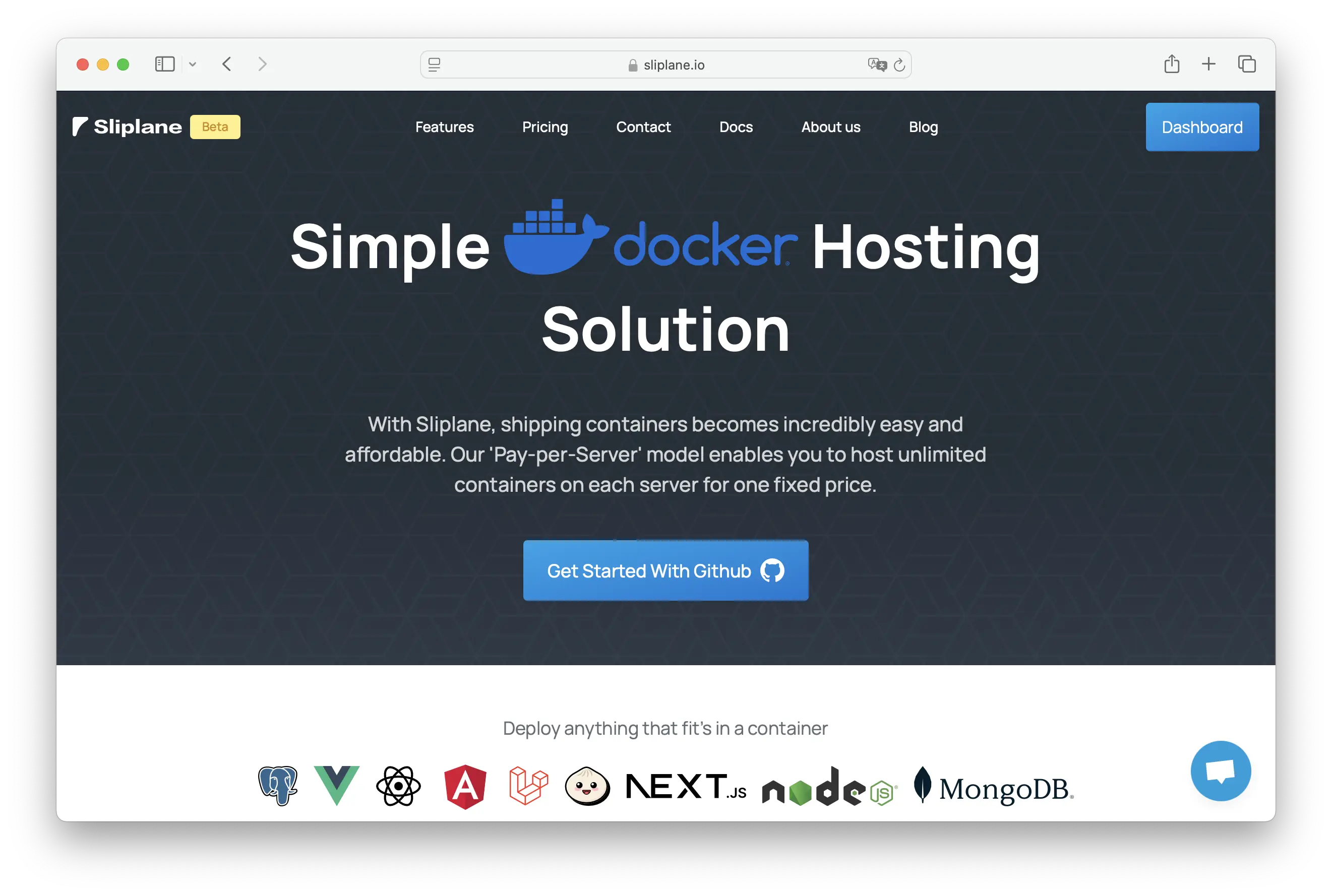
Sliplane is a hosting platform built around Docker. It lets you deploy services from your Git repository and manage them through a clean interface or API. You pay per server rather than per app, with servers starting at €9/month, which gives you more flexibility if you run multiple services.
Compared to AWS Lightsail, Sliplane removes a lot of manual setup. It is especially well suited for users who want to self-host tools like analytics platforms, workflow engines, or databases without managing all the infrastructure pieces themselves.
Best for: Developers who want a simple way to deploy multiple Docker services without worrying about the underlying infrastructure and surprise bills.
2. Hetzner VPS or AWS EC2
For those who prefer full control over their servers, both Hetzner Cloud and AWS EC2 provide raw infrastructure options. Hetzner is known for competitive pricing, strong European locations, and generous included traffic. AWS EC2 gives you access to the wider AWS ecosystem but can become complicated and expensive for small projects.
These services offer no built-in tooling for Docker or app deployments. You manage everything yourself, which gives flexibility but also requires more effort.
Best for: Experienced developers or sysadmins who want full control and are comfortable handling setup and maintenance
3. Coolify
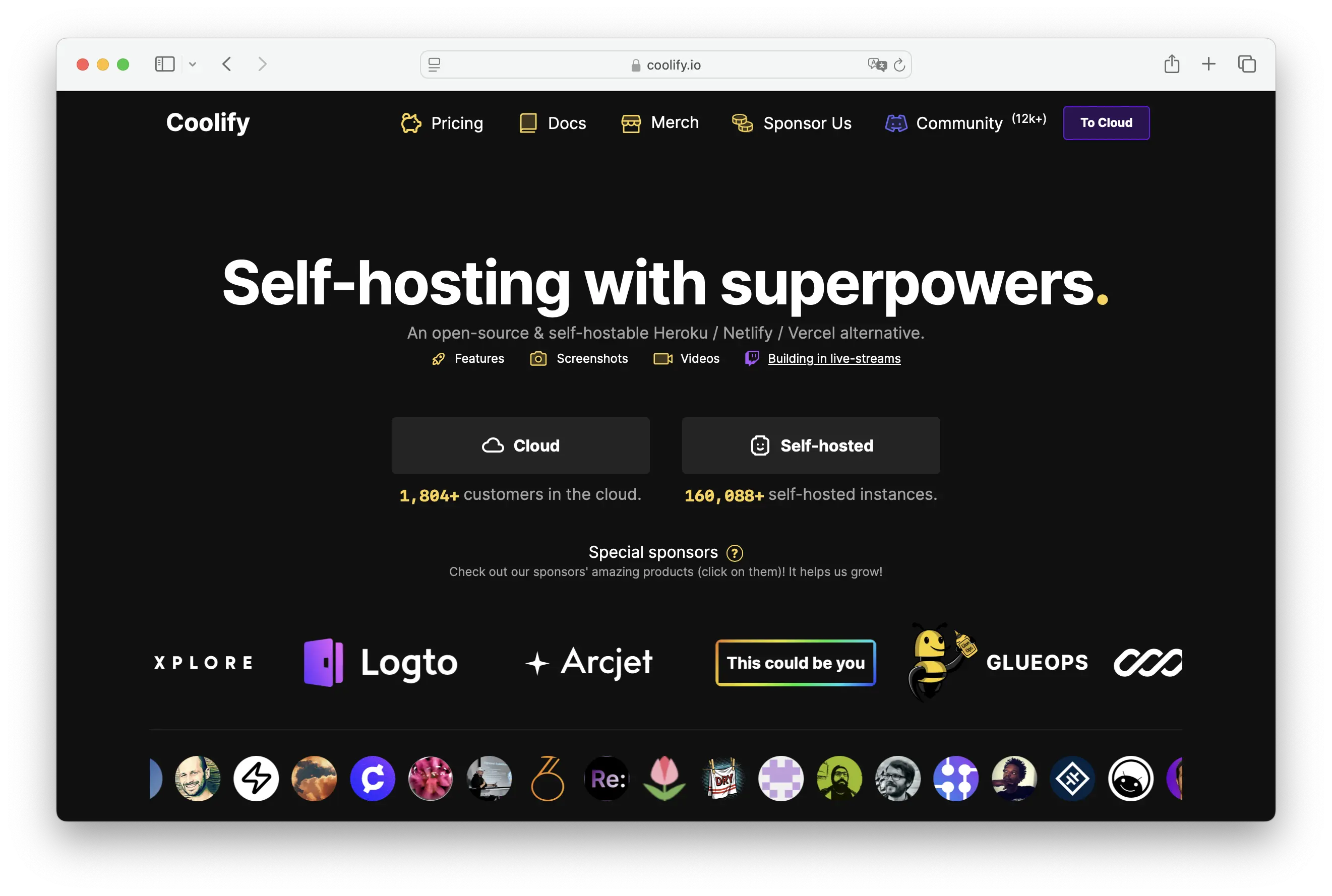
Coolify is an open-source platform that you can host yourself for free, or use as Coolify Cloud from $5/month plus your own servers. It automates deployment, handles reverse proxies, sets up SSL, and provides a nice web UI. It is a solid middle ground between full DevOps and a managed platform.
You will still need a VPS to host Coolify itself, and that server needs to stay online and updated.
Best for: Users who want a Heroku-style experience without giving up control
4. Kamal
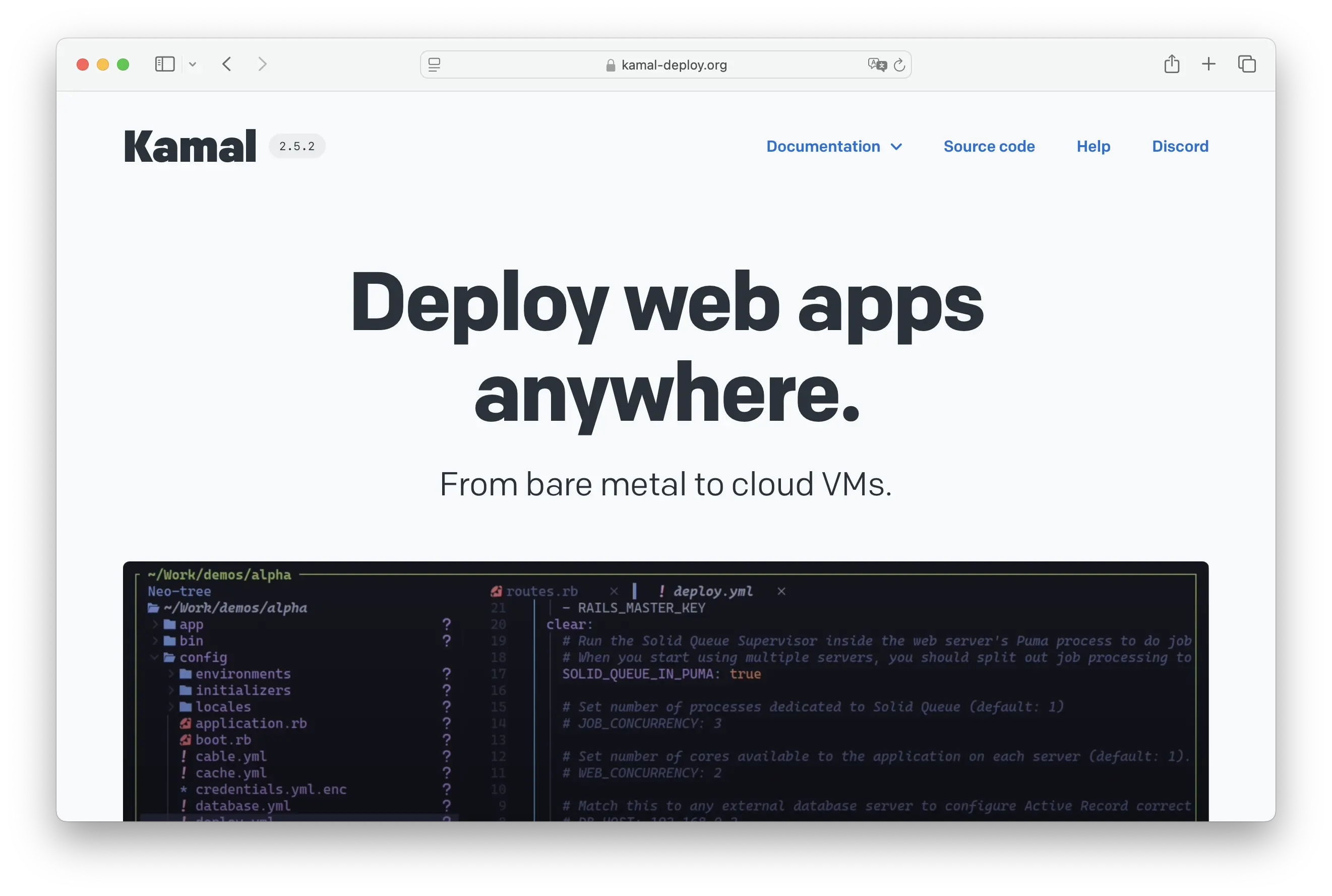
Kamal is a deployment tool built by 37signals. It uses SSH and Docker to deploy applications to your servers. Kamal is focused on simplicity and is a good option if you already manage your own infrastructure and want something lightweight for deploying code.
It does not manage your servers, networking, or SSL. You handle all of that.
Best for: Developers who want minimal tooling for Docker deployments with full server control
5. DigitalOcean App Platform
DigitalOcean App Platform provides a managed experience that deploys code from your Git repositories or container registries. It handles builds, certificates, and updates. However, it charges per service or container, paid container instances start at $5/month, and autoscaling is only available on dedicated instances, which can become expensive for more complex projects.
If you are already using DigitalOcean or want something that works out of the box, it can be a convenient option.
Best for: Teams that prioritize ease of use and are comfortable paying for simplicity
Conclusion
| Platform | Type | Docker Support | Ease of Use | Best For |
|---|---|---|---|---|
| Sliplane | PaaS for Docker | Yes | Very easy | Self-hosted apps and microservices |
| AWS Lightsail | VPS | Yes | Moderate | Simple VPS hosting with AWS billing |
| Hetzner Cloud | VPS | Yes | Moderate | Budget-friendly infrastructure |
| AWS EC2 | IaaS | Yes | Complex | Deep AWS integrations |
| Coolify | Self-hosted PaaS | Yes | Easy | Git-based app deployments |
| Kamal | Deployment tool | Yes | Requires setup | Lightweight Docker deployments |
| DigitalOcean App Platform | Managed PaaS | Yes | Very easy | Small to medium production workloads |
The best alternative depends on your use case. If you want a simpler way to run Docker apps, Sliplane is worth considering. For more control, Hetzner or EC2 may be better. If you want an open-source platform, Coolify or Kamal could work well. For managed deployments, DigitalOcean App Platform offers a user-friendly experience.
FAQ
What is AWS Lightsail?
AWS Lightsail is a simplified cloud platform from Amazon Web Services. It provides virtual servers, storage, and networking for a flat monthly price. It is often used by developers who want to run basic web apps or services without the complexity of AWS EC2 and other core services.
What is AWS Lightsail used for?
Lightsail is commonly used to host WordPress websites, containerized applications, small APIs, and development environments. It is a popular starting point for individuals or small teams who want affordable and predictable pricing.
AWS Lightsail pricing
As of June 10, 2026, AWS Lightsail pricing starts at $5/month for a Linux instance with public IPv4, 0.5 GB memory, 2 vCPUs, 20 GB SSD, and 1 TB transfer. IPv6-only Linux bundles start at $3.50/month with 512 MB memory, 2 vCPUs, 20 GB SSD, and 1 TB transfer. Higher-tier instances with more memory, storage, and bandwidth are available. You also get a set amount of included data transfer, with additional charges for usage beyond that.