
How I Save Money in 2026 by Self-Hosting These 5 Open Source Tools
 Jonas Scholz
SaaS pricing is getting ridiculous.
What starts as a few useful tools can easily snowball into hundreds of euros per month. And if you're running a bootstrapped startup, side project, or freelance stack, every euro counts.
I run a managed Docker hosting platform called Sliplane, so I have the infrastructure chops to self-host the tools I use every day (and you probably can too). And after doing just that, I’ve cut well over €150 per month in SaaS bills. Not with zero downsides, though. You still need backups, updates, and a little patience when something decides to be weird at 23:17.
Here are five open source tools I self-host to save serious money in 2026, plus what the math looks like now. Prices were last checked in June 2026 and can change, because SaaS pricing pages apparently need plot twists.
Plunk as a Self-Hosted Email Platform
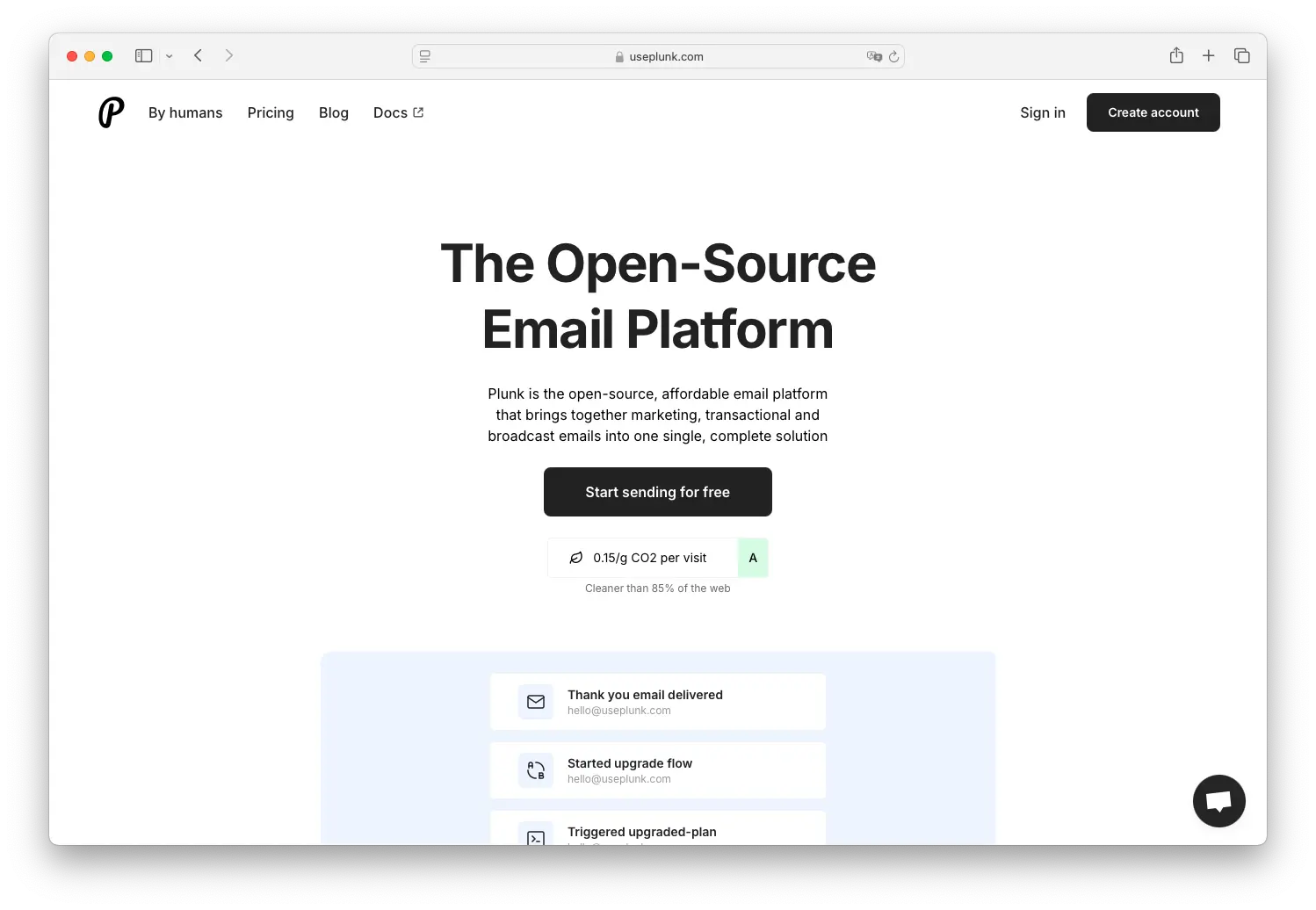
Most email marketing tools are overkill or overpriced. Plunk is a simple UI layer over AWS SES that handles both transactional and marketing emails with ease.
Why I self-host it
I don’t need fancy CRM integrations or audience segmentation. I just want solid deliverability and automation.
What I save
- Mailchimp or Customer.io: roughly €15 to €100+ per month depending on contacts and features
- Self-hosted Plunk with SES: around €2 per month for my usage, plus a share of the server
n8n as an Automation Engine
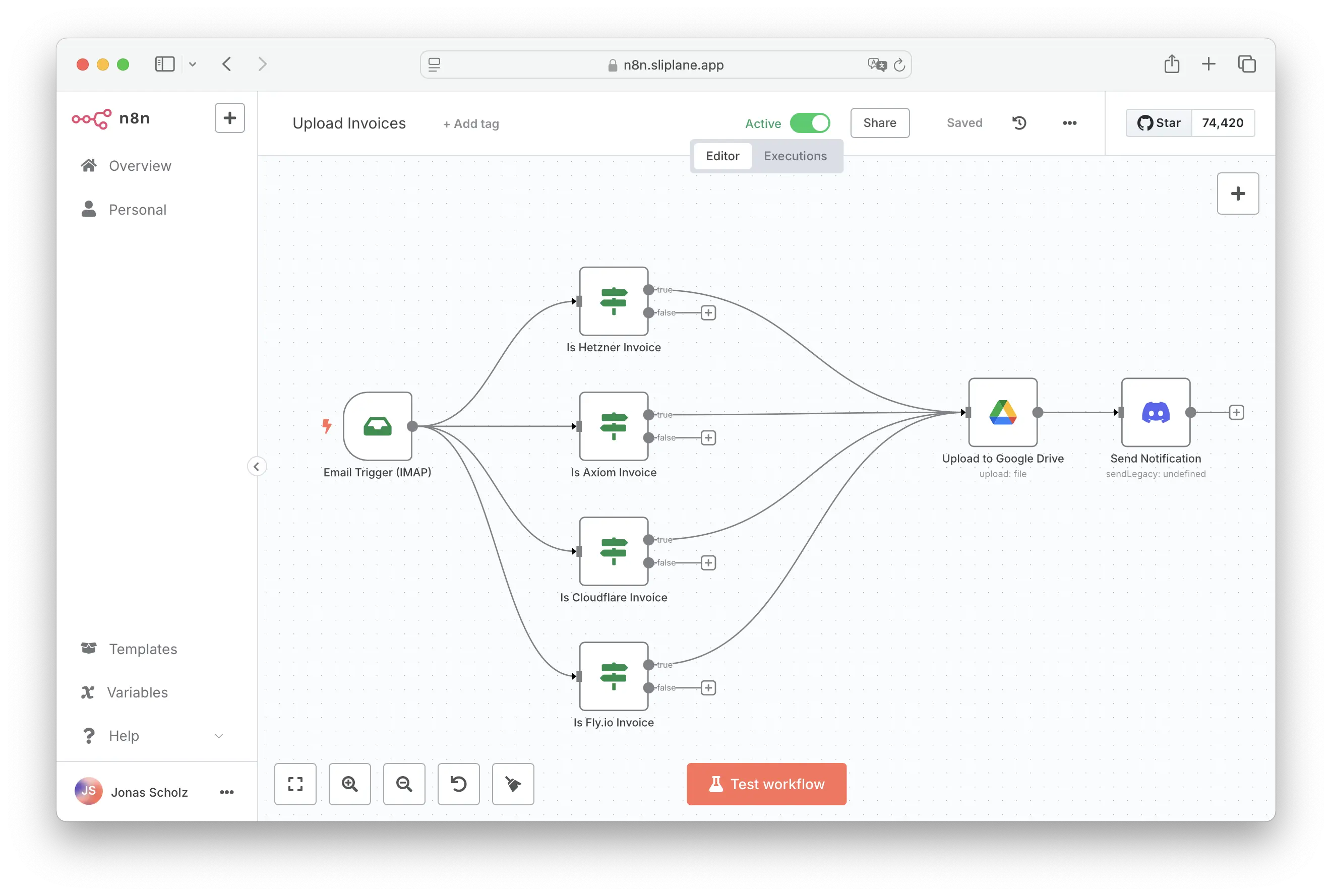
n8n is an open source tool that lets you create automation workflows, similar to Zapier or Make, but with very good AI integrations and a much more developer-friendly feel. I use it to automate back-office tasks. You can read more about how we use n8n here.
Why I self-host it
n8n Cloud is still fair compared to many automation tools, but the official plans are priced by workflow executions. As of June 2026, Starter is €20/month and Pro is €50/month when billed annually. For my small internal workflows, self-hosting is plenty.
What I save
- n8n Cloud: €20 to €50 per month for the common paid plans
- Self-hosted: around €1 per month (on shared infrastructure)
👉 My guide on self-hosting n8n
Postgres as a Reliable Core Database
I use Postgres to store everything from customer configurations to time series metrics via the TimescaleDB extension.
Why I self-host it
Managed Postgres, especially with Timescale features, becomes expensive fast once you need predictable compute, storage, backups, and room to grow. Timescale Cloud starts around US$30/month for compute before storage grows, and production databases can easily land much higher. I run Postgres on dedicated infrastructure for control and predictable costs.
What I save
- Managed Postgres or Timescale Cloud: roughly €30 to €300 per month depending on size
- Self-hosted on a VPS or Sliplane server: around €9 to €20 per month
If you don't have a lot of experience in self-hosting, I'd recommend hosting some easier tool first. Your database is a critical part of your infrastructure and can be a pain to manage if you don't have experience!
Nextcloud as a File Sharing and Sync Solution
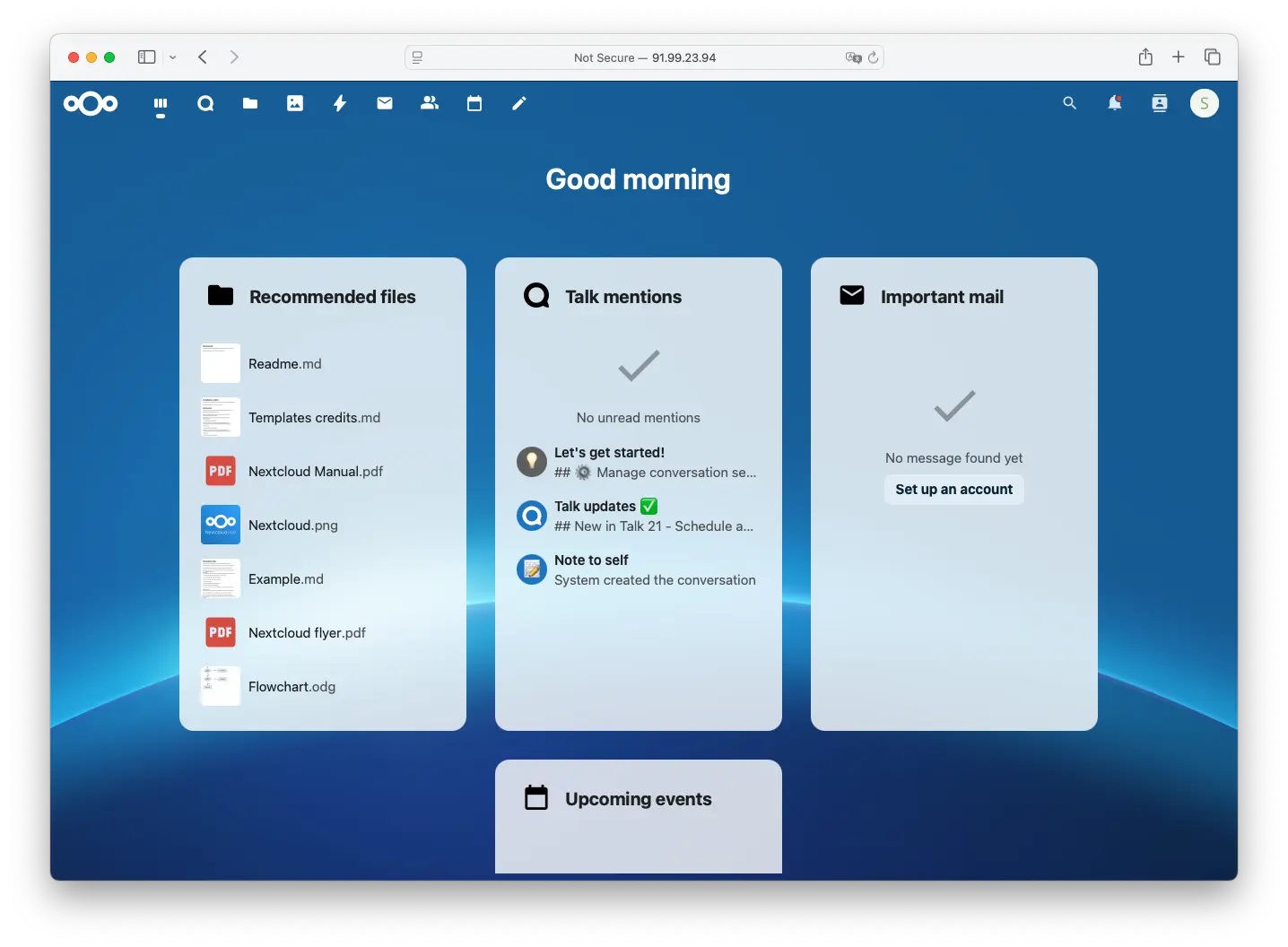
Nextcloud is what I use to store internal files, contracts, reports, and GDPR-sensitive documents.
Why I self-host it
It's a great solution for clients or teams who want to avoid Google or Dropbox, especially in Germany where data privacy is a serious concern.
What I save
- Dropbox or Google Workspace: roughly €7 to €18 per user per month for the common business plans
- Self-hosted: around €1 to €2 total per month when it shares an existing server
Redis as a Lightweight Cache
Redis is a caching layer I use for small workloads like reducing load on my database or API calls.
Why I self-host it
Redis Cloud still starts at around $5 per month for the smallest paid shared deployment. My containerized Redis instance uses less than 128 MB of RAM and costs next to nothing. Additionally, I want Redis to be as close to my other services as possible, and self-hosting makes that easy.
What I save
- Redis Cloud: around €5 per month
- Self-hosted: less than €0.50 per month
Monthly Savings Overview
| Tool | SaaS Cost | Self-Hosted Cost |
|---|---|---|
| Plunk | €15 to €100+ | ~€2 |
| n8n | €20 to €50 | ~€1 |
| Postgres | €30 to €300 | €9 to €20 |
| Nextcloud | €7 to €18 per user | €1 to €2 |
| Redis | ~€5 | < €0.50 |
| Total | ~€77 to €473+ | ~€15 to €25 |
The prices for self-hosted are based on the relative cost, assuming you host multiple services on a single server like you can do with Sliplane.
How to Decide if Self-Hosting Is Right for You
Self-hosting is not always the right answer. You need to balance time and money.
For me, I have more time than money. So spending a few hours setting up and maintaining these tools makes financial sense.
If you're already stretched thin, €15 per month for a managed option may be worth it for peace of mind. That’s why I recommend:
- Start with low-risk tools like n8n or Plunk
- Avoid jumping straight into critical infrastructure like Postgres unless you are confident in managing it
Why I Can Host So Cheaply Using Sliplane
A big part of why I can host all of these tools affordably is because of Sliplane, the Docker hosting platform I run.
Most platforms charge per service. That means if your app has a database, backend, and frontend, you are paying three times.
Sliplane charges per server. You decide how many services to run on that server.
I run Redis, n8n, and Plunk together on a single €9 per month server. It works beautifully and costs a fraction of what many per-service platforms would charge for the same setup.
👉 Want to try it? Sliplane.io
Final Thoughts
Self-hosting is not about being a purist. It is about cutting costs, owning your infrastructure, and staying flexible.
It is not for everyone, and not every tool should be self-hosted. But if you are comfortable with Docker and want to reduce SaaS bloat, it is one of the easiest and most rewarding ways to save money.
Questions, comments, or setup issues? Drop them below. Or try your first self-hosted project with Sliplane.
Cheers,
Jonas