5 Awesome ownCloud Alternatives in 2026
 Jonas Scholz
ownCloud is still around in 2026, but the decision is more nuanced than it was a few years ago. There is the classic PHP-based ownCloud 10, the newer Go-based ownCloud Infinite Scale, and the broader question of whether you want to stay in the ownCloud ecosystem at all.
The big changes since the old version of this post: OpenCloud has become a serious modern option, Pydio Cells is still relevant for compliance-heavy teams, and peer-to-peer sync tools like Syncthing or Resilio are usually not direct ownCloud replacements. They are great sync tools, but they do not give you the same central web UI, sharing links, team administration, and browser-based collaboration.
If you want the easiest path, you can self-host OpenCloud on Sliplane for €9/month, or follow our OpenCloud easy-way guide. But if you are comparing the field, these are the five ownCloud alternatives worth shortlisting in 2026.
1. Nextcloud
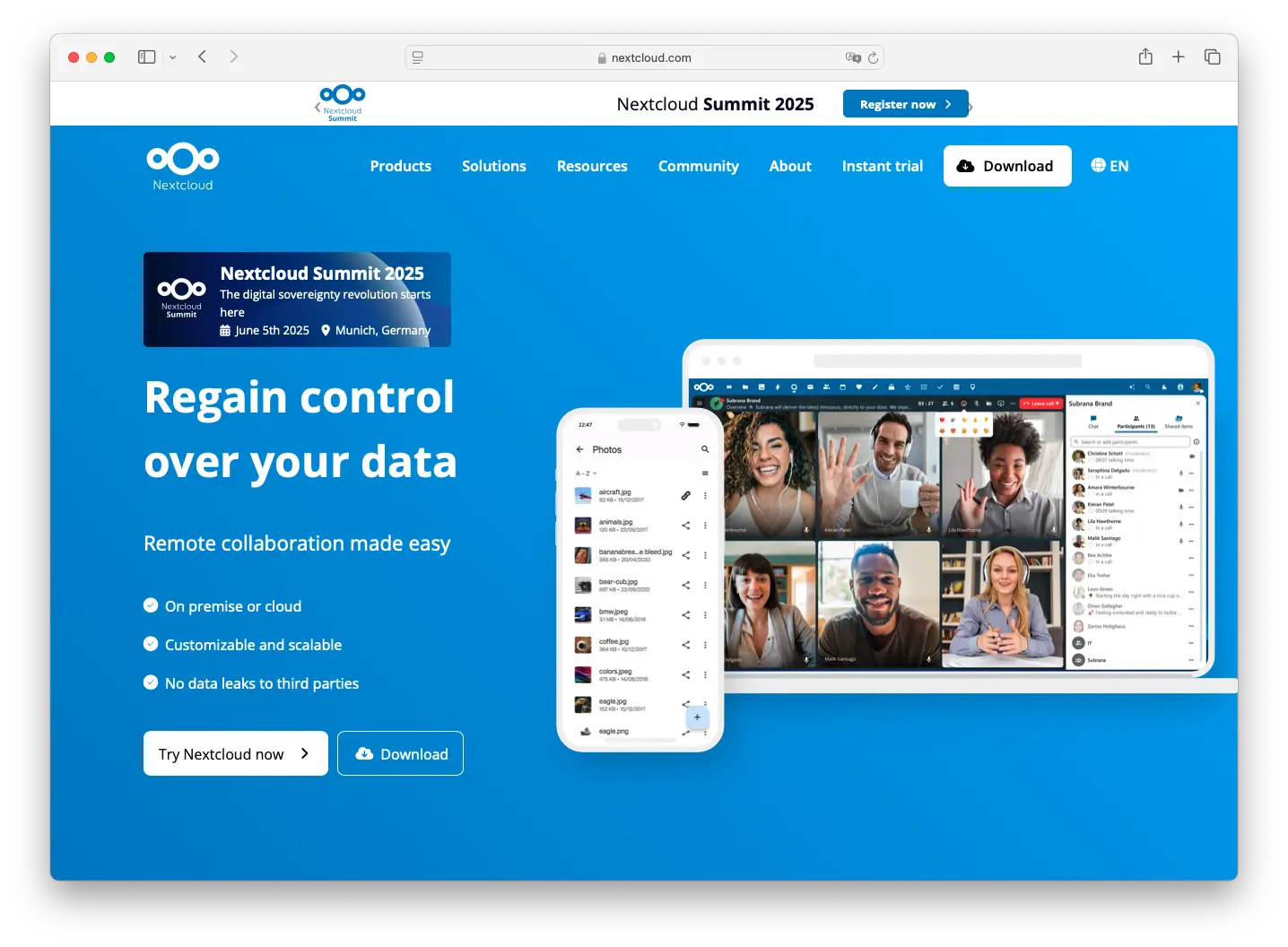
Nextcloud is still the default answer for most teams leaving ownCloud. It started as an ownCloud fork, but it has grown into a full collaboration suite with files, calendars, contacts, video calls, office editing, whiteboards, forms, automation, and a huge app ecosystem.
- Features: File sync and share, public links, desktop and mobile clients, Nextcloud Office, Talk, Groupware, app store, MFA, SAML/OIDC support, encryption options, and federation.
- Why you should use it: Pick Nextcloud if you want the broadest open-source replacement for Google Workspace or Microsoft 365. It is mature, widely deployed, and has the largest ecosystem in this category.
- Why not: It is heavier than leaner file-sharing tools. A good production setup usually needs a database, Redis, background jobs, careful PHP tuning, and regular maintenance.
- Pricing: Community edition is free and AGPL. Nextcloud Enterprise starts at €71.29/user/year for 100 users on the Standard plan as of June 2026.
If Nextcloud is your pick, we have guides for self-hosting Nextcloud the easy way and self-hosting Nextcloud on Ubuntu.
2. OpenCloud
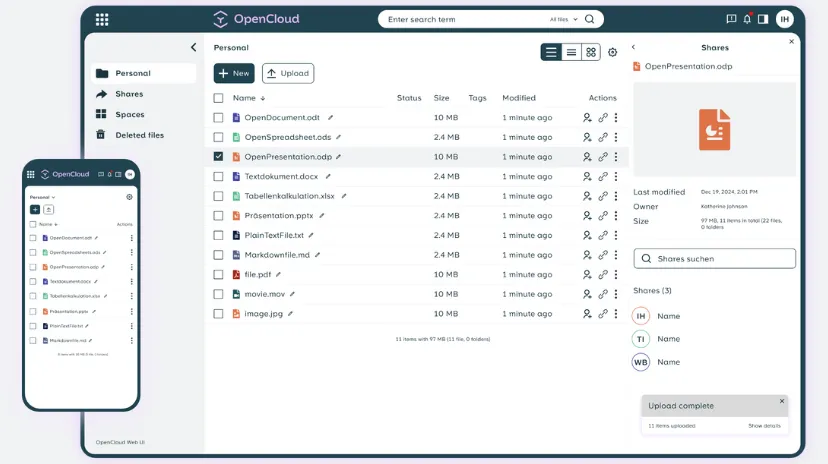
OpenCloud is the freshest option on this list and one of the most interesting ownCloud alternatives for 2026. It is an open-source file management and collaboration platform from the Heinlein Group, built around data sovereignty, modern deployment, and a cleaner operational model than older PHP-based stacks.
- Features: File sharing, desktop sync, Web Office via Collabora, workspaces, file requests, full-text search with OCR, versioning, federated sharing, SSO/MFA, audit logs, antivirus, and file firewall.
- Why you should use it: Choose OpenCloud if you want a modern self-hosted file cloud with a simpler product surface than Nextcloud and strong European data-sovereignty positioning.
- Why not: It is younger than Nextcloud and Seafile. The ecosystem, third-party app catalog, and community troubleshooting material are still smaller.
- Pricing: Community package is free. Enterprise pricing is on request as of June 2026.
3. Seafile
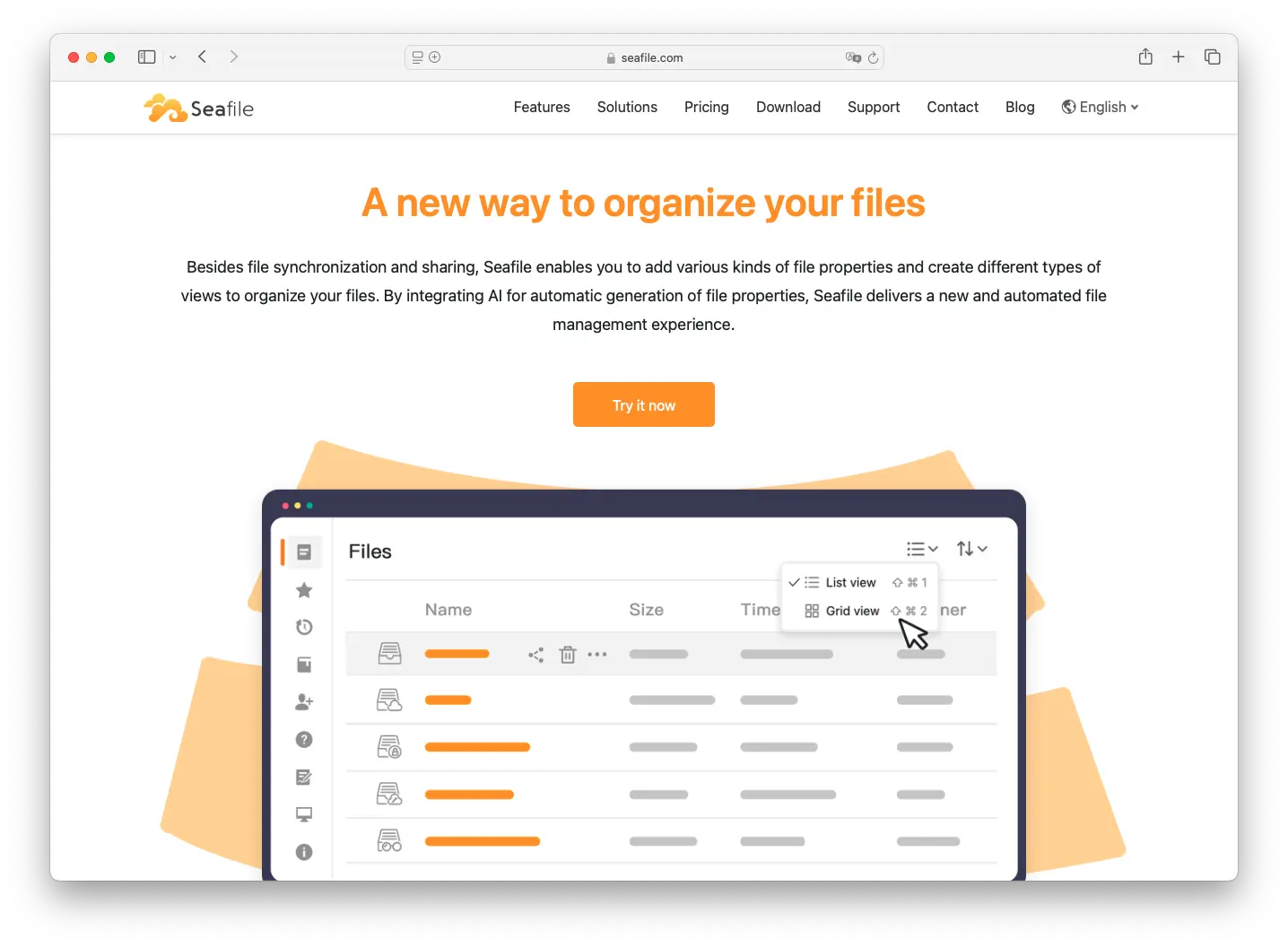
Seafile is the performance-focused choice. It does not try to be a full office suite or groupware platform. It focuses on fast, reliable file sync, versioning, sharing, and team access.
- Features: Fast sync, library-based file organization, version control, public links, desktop and mobile clients, virtual drive clients, WebDAV, optional Office integration, and LDAP/AD support in Pro.
- Why you should use it: Use Seafile when sync speed and reliability matter more than having a giant app ecosystem. It is especially good for large files and teams that mostly need file sync plus sharing.
- Why not: Collaboration features are narrower than Nextcloud. Some enterprise features, like full-text search, file locking, audit logs, and advanced permissions, live in the Professional edition.
- Pricing: Community edition is free and open source. Seafile Pro is free for 3 users, $100/year total for 9 users, and starts at $48/user/year from 10 to 249 users as of June 2026.
We also compare tools in this lane in our Seafile alternatives post.
4. Pydio Cells
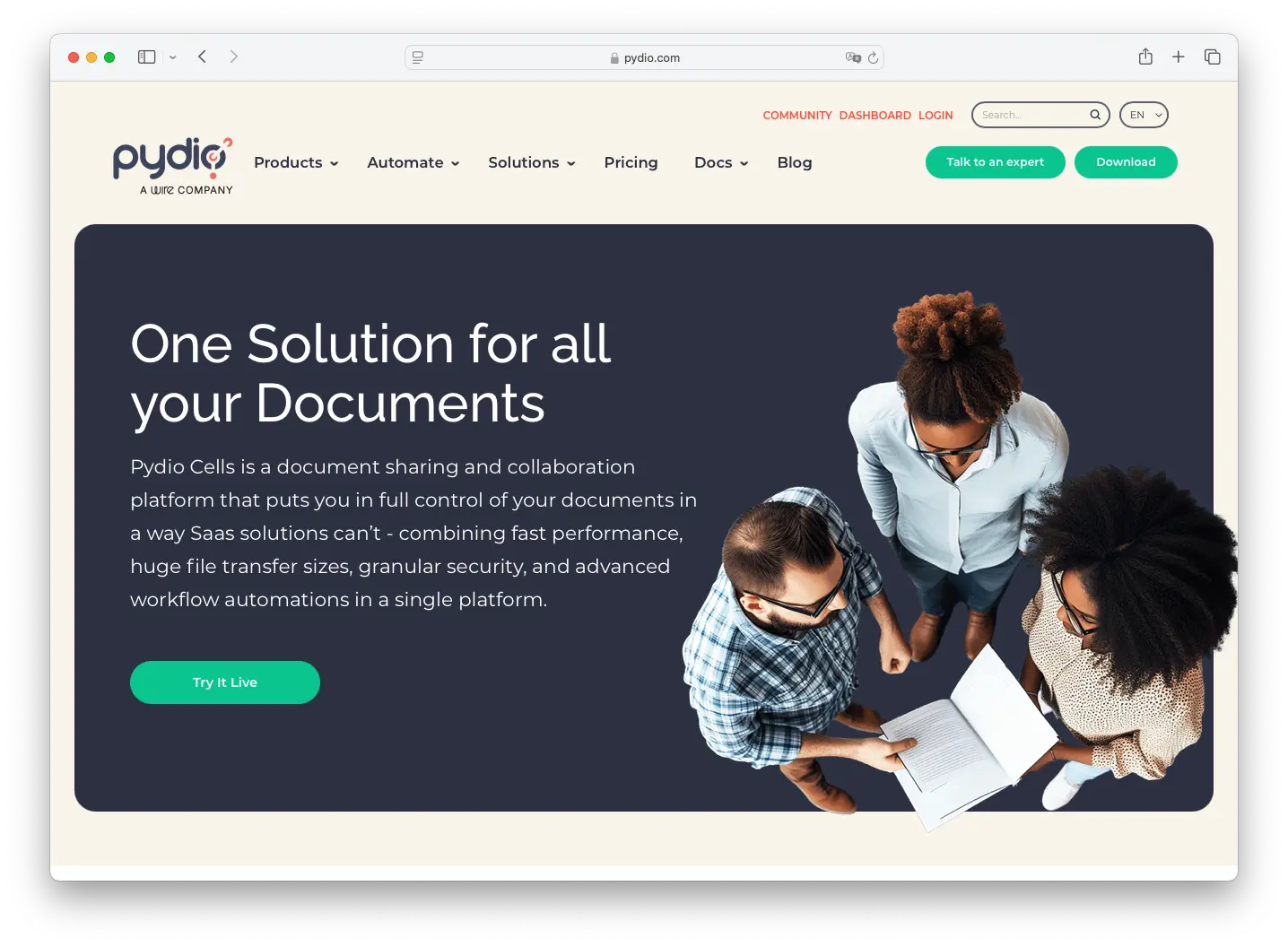
Pydio Cells is built for organizations that need secure file sharing, workspaces, auditability, and compliance controls. It is less of a personal cloud and more of an enterprise document portal.
- Features: Workspaces, powerful sharing, filesystem and S3-compatible storage, document previews, REST API, WebDAV, mobile and desktop sync, AD/LDAP and SSO in paid editions, audit logs, MFA, and granular access controls.
- Why you should use it: Pydio Cells makes sense for legal, healthcare, finance, public sector, or other teams where access policy and audit trails matter as much as file sync.
- Why not: It is more enterprise-oriented and less casual than Nextcloud or OpenCloud. The free Home edition is useful for evaluation and smaller setups, but many organization-grade features are paid.
- Pricing: Pydio Cells Home is free. Cells Connect starts at €3,280/year for 50 users, and Cells Enterprise starts at €4,380/year for 50 users as of June 2026.
5. ownCloud Infinite Scale
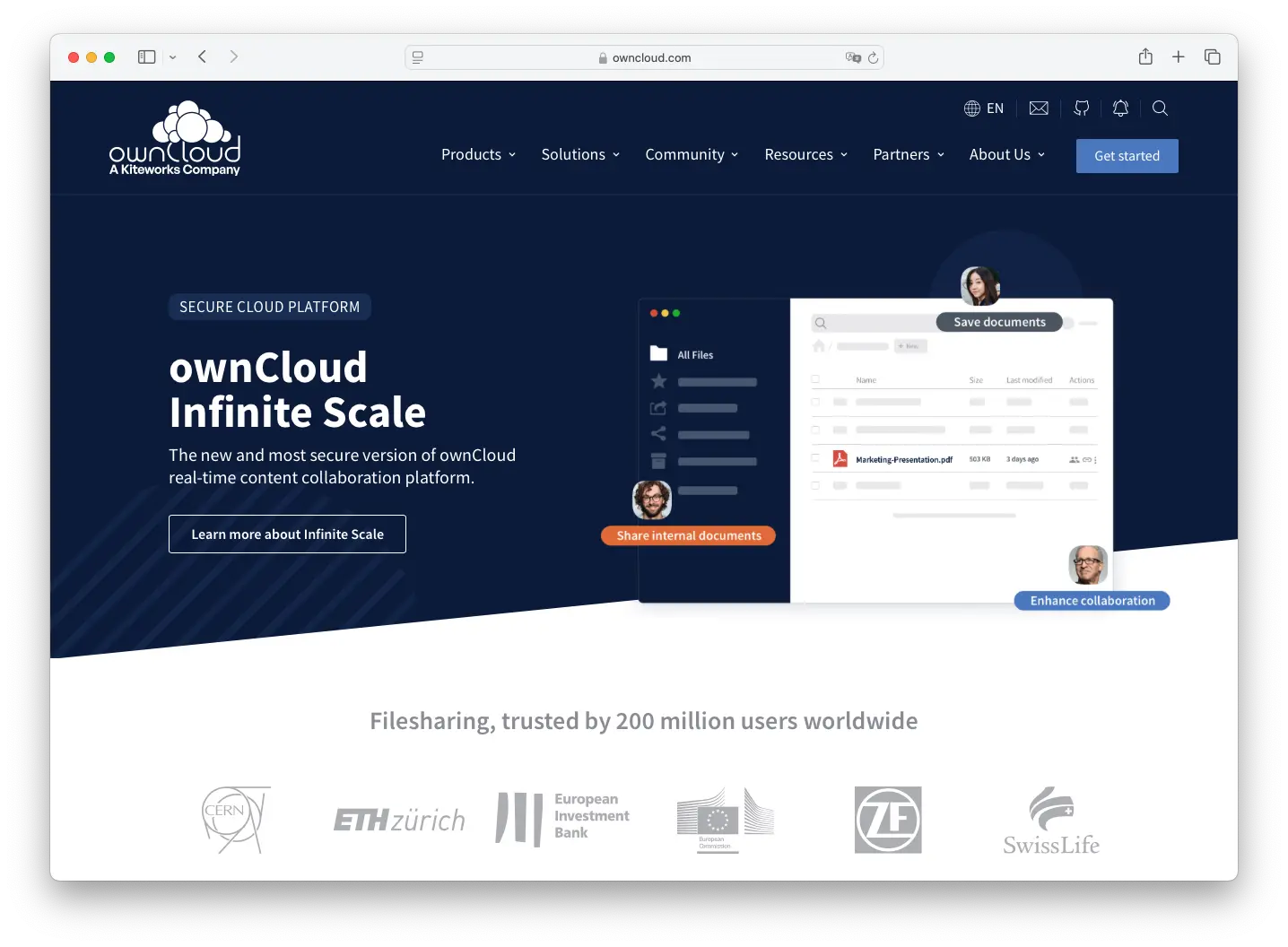
ownCloud Infinite Scale is not a clean break from ownCloud, so it is a special case. If you are leaving classic ownCloud 10 because the PHP stack feels old, Infinite Scale is the modern Go-based path inside the same ecosystem. If you are leaving because you want vendor distance, pick one of the other options.
- Features: Spaces, file sync and share, public links, Web Office integrations, full-text search, metadata, federated sharing, cloud-native deployment, and enterprise controls.
- Why you should use it: It is worth evaluating if you already run ownCloud, need continuity, and want a more modern architecture without retraining everyone on a totally different product.
- Why not: It is still ownCloud. The community is smaller than Nextcloud's, and the post-acquisition product direction may not be what every open-source-first team wants.
- Pricing: Community edition is free with unlimited users. Standard and Enterprise packages start from 25 users, with sales-led pricing; ownCloud also lists special large-deployment or education pricing from €1.85/user/year as of June 2026.
Honorable mention: Filestash is excellent if you want a web UI and access layer for existing storage like S3, SFTP, WebDAV, SMB, SharePoint, or Google Drive. It is not a classic file-sync suite, so I would not rank it above the tools above for a straight ownCloud replacement. But for "put a good web interface on top of storage we already have", it belongs on your research list.
Conclusion
| Tool | Best For | Setup Complexity | Collaboration Depth | Pricing Snapshot |
|---|---|---|---|---|
| Nextcloud | Full collaboration suite | Medium | Very high | Free community; Enterprise from €71.29/user/year |
| OpenCloud | Modern sovereign file sharing | Easy to medium | Medium | Free community; Enterprise on request |
| Seafile | Fast file sync | Medium | Medium | Free community; Pro free for 3 users, then paid |
| Pydio Cells | Compliance-heavy teams | Medium to hard | High | Free Home; Connect from €3,280/year |
| ownCloud Infinite Scale | Staying close to ownCloud | Medium | Medium | Free community; paid packages from 25 users |
My 2026 recommendation: start with Nextcloud if you want the biggest ecosystem, OpenCloud if you want a modern and simpler self-hosted file cloud, and Seafile if sync performance is the main thing. Look at Pydio Cells for enterprise governance, and ownCloud Infinite Scale if you want an upgrade path rather than a full migration.
Want the least painful route? Deploy OpenCloud on Sliplane for €9/month, or compare more options in our OpenCloud alternatives and Nextcloud alternatives guides.